The implementation of a floating solar power facility is a well-orchestrated engineering undertaking. At Floatex Solar, this process is well defined - starting with the initial site survey and continuing through construction, commissioning and handover, with a clear focus on predictability, technical discipline and control of execution.
Floatex has supplied both large-scale and small-scale floating solar installations in India, including large reservoir-based utility-scale and industrial plants as well as smaller systems on more compact water bodies. Across these projects, the design-to-deployment structure is applied consistently to make sure that engineering intent is carried all the way through to on-water execution.
The following is a summary of how Floatex Solar converts engineered concepts into a working floating solar power plant.
Site Evaluation and Mobilisation Planning
Every project starts with site evaluation and assessment. The task at this stage is to understand how the water body works both as a construction environment and as a long-term operating asset.
The main site parameters usually considered are:
- Waterbody layout and usable surface area
- Access to shoreline
- Local wind and wave exposure
- Access to grid interconnection points
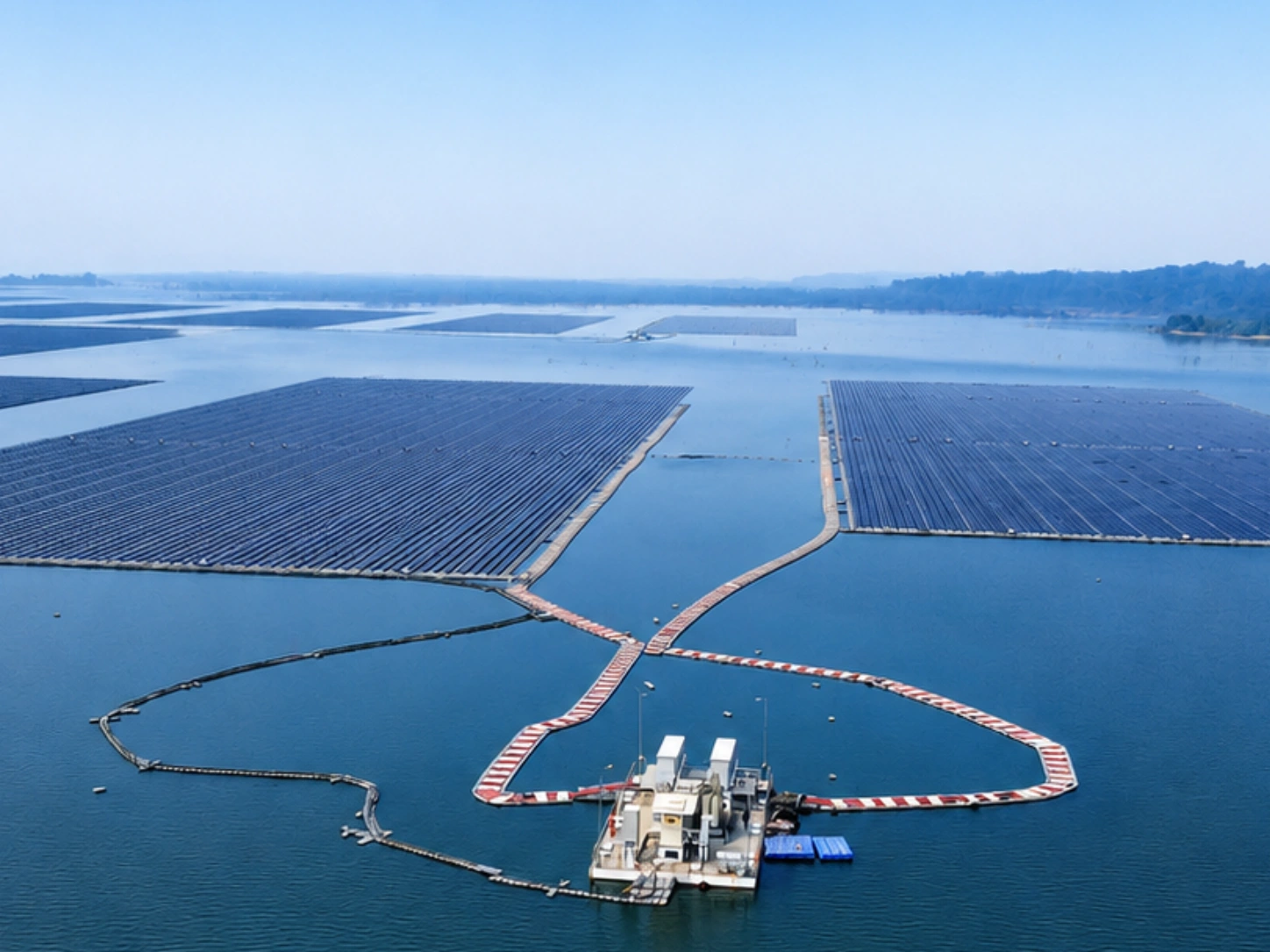
Developed by Floatex Solar, the NTPC Kawas floating solar plant in Gujarat sits on an operating reservoir. Construction planning in such environments has to align with existing plant operations, access restrictions, and safety demands.
Based on the site assessment, mobilisation planning is used to define:
- Construction camps and workforce access
- Storage and staging areas for floats, modules and electrical equipment
- Navigation corridors and safety buffers for on-water work
- Site-specific environmental or operational requirements and permits
This initial planning lays down the ground rules within which the project is implemented.
Anchoring & Mooring Design Integration
After understanding the site structure, anchoring and mooring design becomes a major component of the second step of system planning. These factors regulate the behaviour of the floating array against wind, wave action and water-level variations.
At Floatex Solar, anchoring approaches are selected based on site conditions and operational requirements:
- Deadblock anchoring: used across a variety of reservoir and industrial systems.
- Rock bolt anchoring: used in works like the Dalmia Cement 4 MWp floating solar project in Bihar.
Mooring geometry is designed in parallel with the array layout. This phase includes:
- Defining anchor locations and fairlead points
- Surveying the bathymetric and substrate environment
- Choosing anchoring systems appropriate to water depth and soil
- Checking anchor components before mobilisation
This is done to ensure that anchoring behaviour during construction and operation matches what was assumed in the design.
Float Platform Fabrication and Block Planning
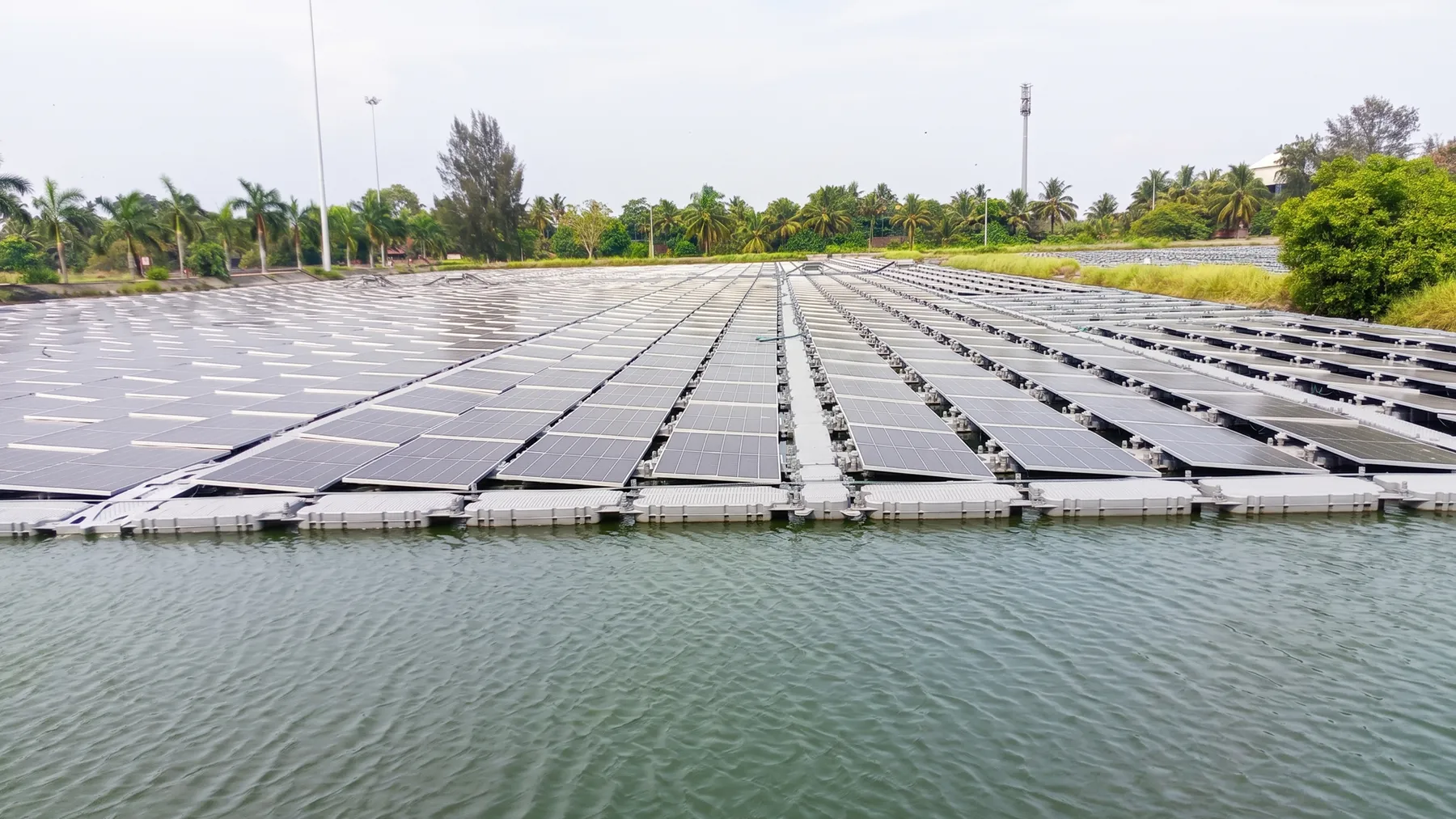
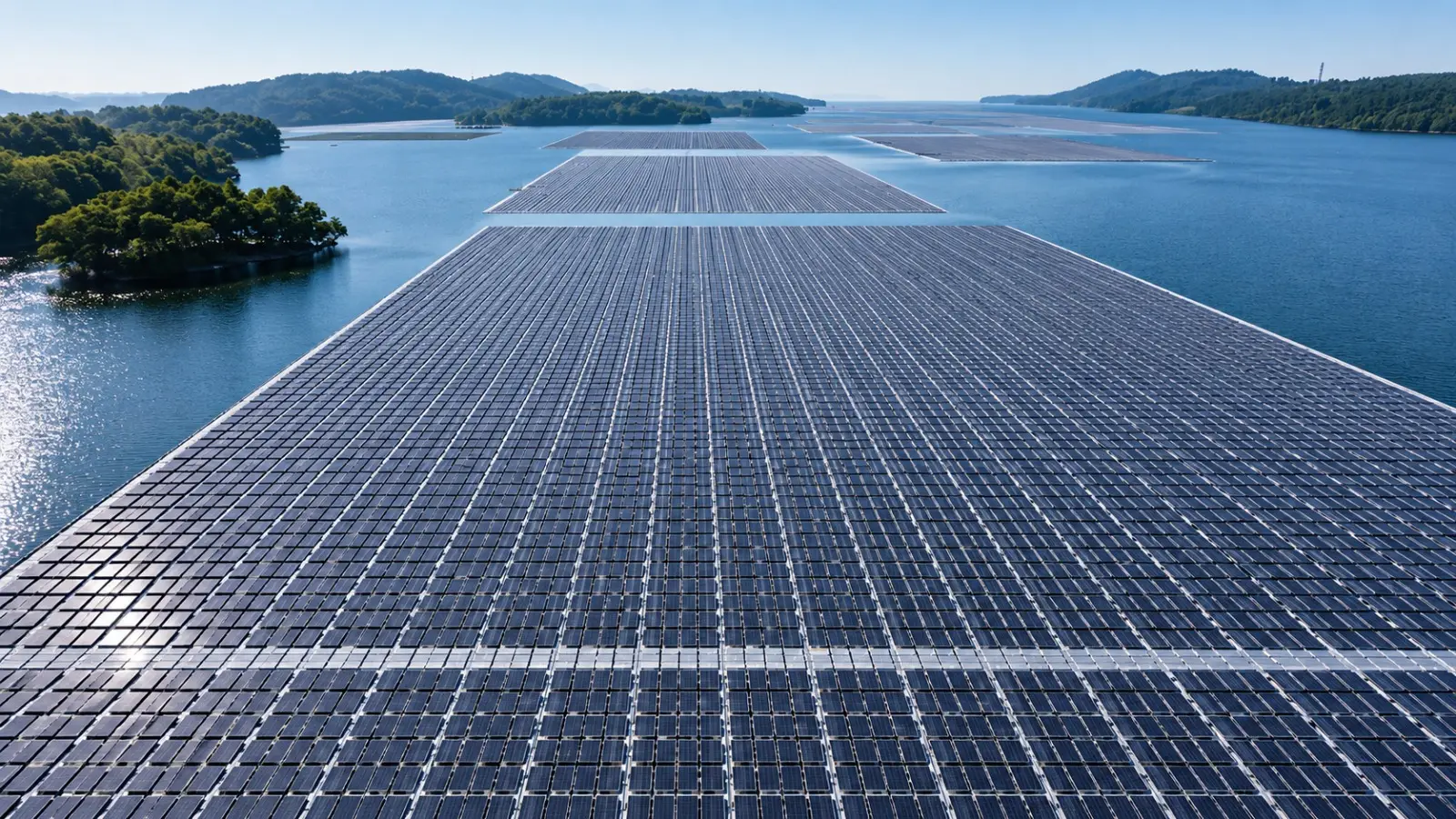
Once the anchoring parameters are determined, attention switches to float platform fabrication and block planning. Floatex Solar's floating systems are built on modular construction principles - the floating platforms are made as blocks rather than as one continuous structure.
At this phase, the teams:
- Prepare modular float sections
- Integrate mounting structures for PV modules
- Plan initial cable routing within each block
- Carry out pre-deployment inspections
The block-based approach enables:
- Improved quality control during fabrication
- Easier handling and transportation
- Less risk of poor coordination between mechanical and electrical teams
On-Water Positioning and Assembly
As soon as the floating blocks are ready, it is time to build on the water. On-water installation generally includes:
- Installation of anchoring and mooring equipment
- Towing pre-assembled float blocks into position
- Adjusting mooring line tensions to design benchmarks
- Joining neighbouring blocks mechanically
The positioning is done in stages, with alignment and spacing verified as the array grows. This staged methodology gives more control over geometry and movement behaviour, especially in large reservoirs.
Large projects developed by us, such as the NTPC-BHEL floating solar projects, have shown that phased on-water assembly is a viable approach for large-scale work.
Mechanical Integration and Electrical Routing
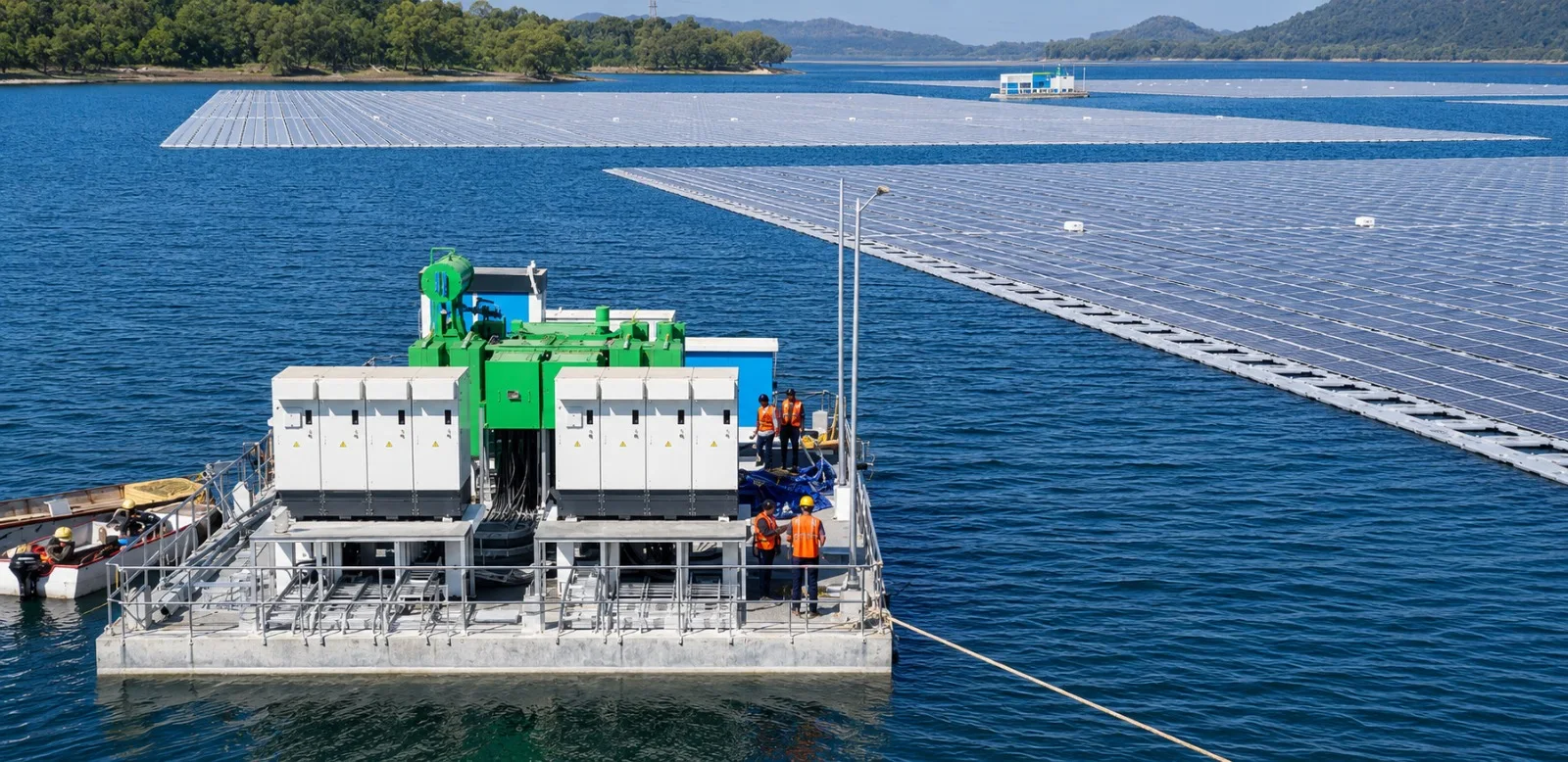
Once the blocks have been placed, we proceed to mechanical integration and electrical routing. This stage includes:
- Installing PV modules on mounted structures
- Securing cable trays and protective conduits
- Installing DC wiring in each block
- Routing cables toward inverter and combiner locations
Structural design is coordinated with electrical layouts without creating any additional stress on the system. Our smaller industrial projects - for example, the 1.5 MWp Hygenco-Jindal facility at Hisar - echo the same principles of coordination in a much smaller and more restricted location.
Progressive Testing and Commissioning
At Floatex Solar, we follow a progressive testing approach. This typically includes:
- Mechanical checks on mooring response at block level
- Cable continuity and insulation resistance testing
- Verifying inverter response and power quality before full energisation
Progressive commissioning helps detect problems at an early stage, cuts down on rework, and facilitates easier grid integration - particularly when the project is delivered across several phases of deployment.
Handover and Operational Readiness
After commissioning, the project passes to operational readiness. This phase includes:
- Final inspections and compliance verification
- Completion of as-built documentation
- Establishment of inspection and maintenance access
- Organised transfer to client operations units
For our industrial and utility clients such as BPCL and Avaada Power, this has meant that floating solar assets integrate smoothly with existing operating systems and power demand patterns.
Managing Execution Challenges in Floating Solar Projects
The deployment of floating solar comes with technical and logistical challenges. These are managed at Floatex Solar through a combination of design choices and controlled on-site implementation.
Water-Level Variation and System Movement
Reservoirs and industrial water bodies experience operational and seasonal water-level fluctuations, which in turn affect mooring geometry, float freeboard and cable slack. Floatex addresses this by:
- Designing mooring layouts for the full operating water-level range
- Allowing controlled movement rather than rigid restraint
- Coordinating cable routing with expected float motion
Anchoring Accuracy Across Large Footprints
Small deviations in anchor placement can compound across large arrays, affecting alignment and load distribution. Floatex mitigates this by:
- Finishing anchoring geometry early in the design stage
- Attaching anchors in a specific order to ensure reference alignment
- Checking anchoring positions before proceeding to block interconnection
On-Water Logistics and Sequencing
Floating construction involves limited working space and interdependent activities on water. Floatex has dealt with this by:
- Block installation (as opposed to full-array assembly)
- Clear separation of anchoring, assembly, and electrical work fronts
- Daily coordination between marine and installation teams
Electrical Integration on Floating Structures
Electrical systems must remain reliable even under constant low-amplitude movement. Floatex ensures this by:
- Aligning electrical layouts with structural movement characteristics
- Protecting cable runs and connection points against fatigue and ingress
Execution at Scale
As project capacity increases, consistency across thousands of floating components becomes a fundamental issue. We remain in control through:
- Modular construction and standardisation of installation practices
- Integrating quality checks into day-to-day operations
- Checking system behaviour as it develops, not after the fact
The Floatex Approach
By applying this implementation-based strategy across both industrial and utility-scale installations, Floatex Solar has transformed engineered designs into trusted floating solar plants operating on water.
Conclusion
Floating solar projects can only succeed when design intent is executed consistently. At Floatex, early site assessment, built-in anchoring and layout planning, modular construction, and phased commissioning combine to handle the practicalities of constructing on water. This execution-based strategy lets floating solar power plants transition between construction and operation with predictable behaviour, long-term stability, and minimal intervention throughout their operating lifetime.