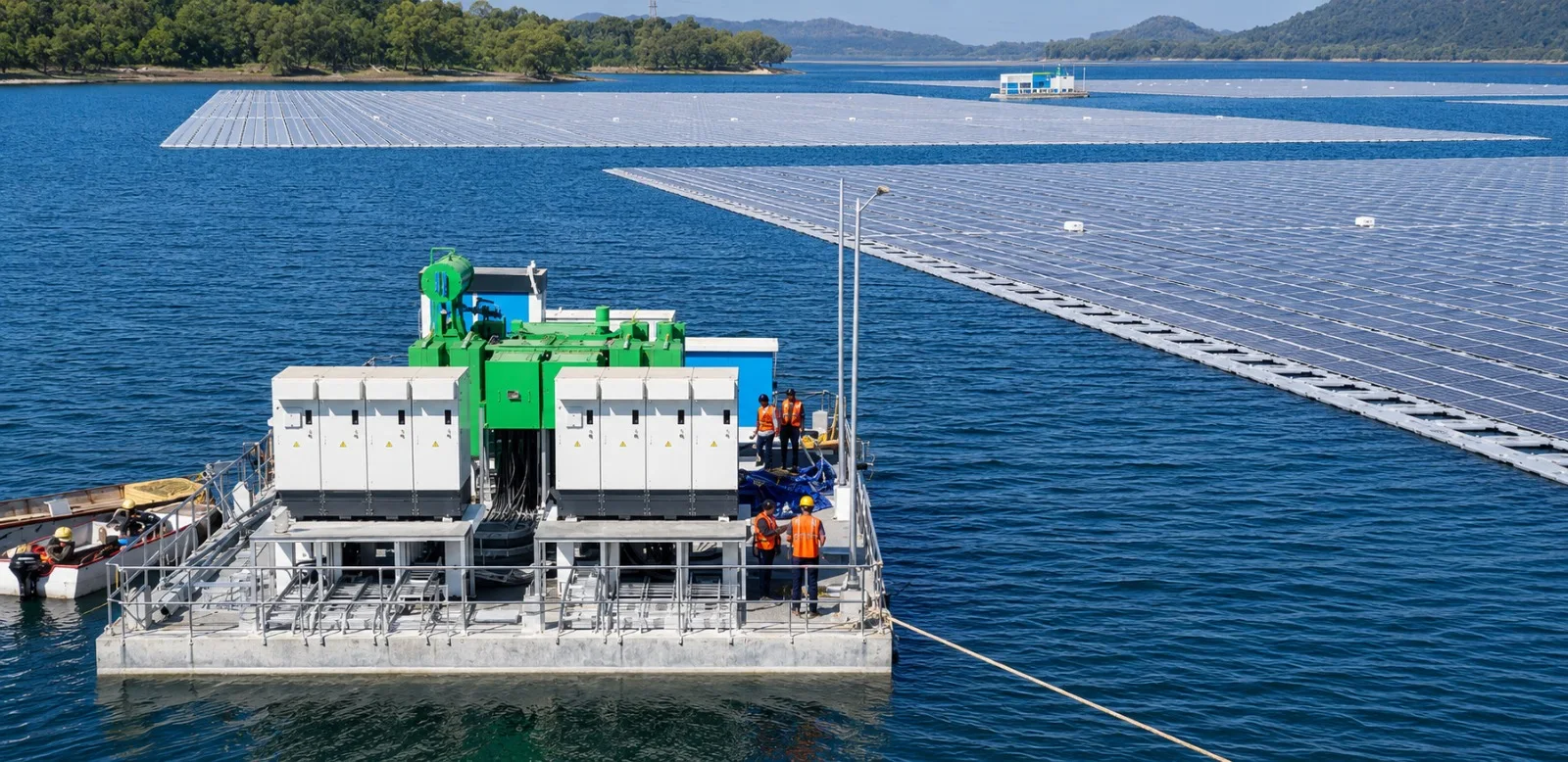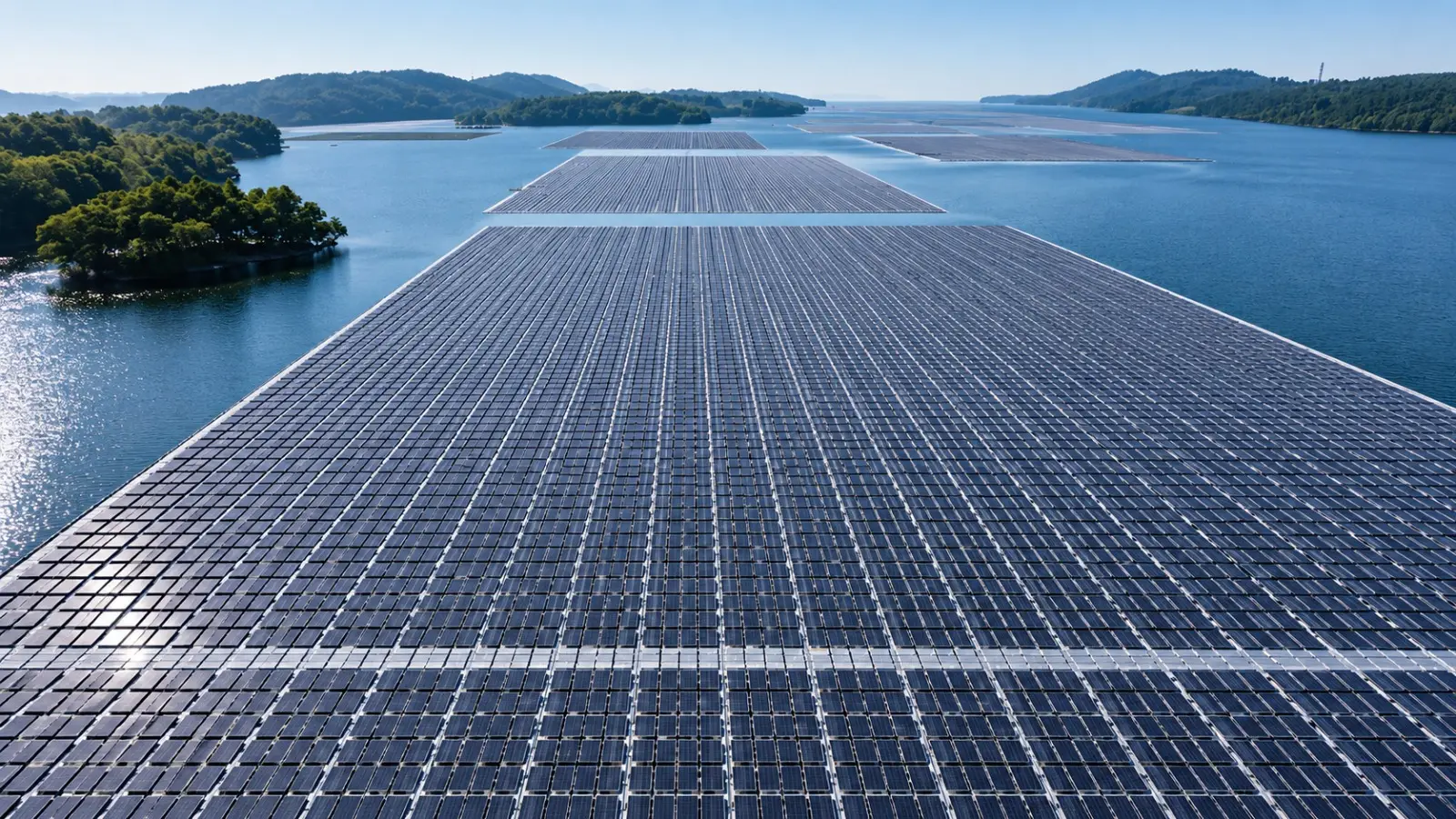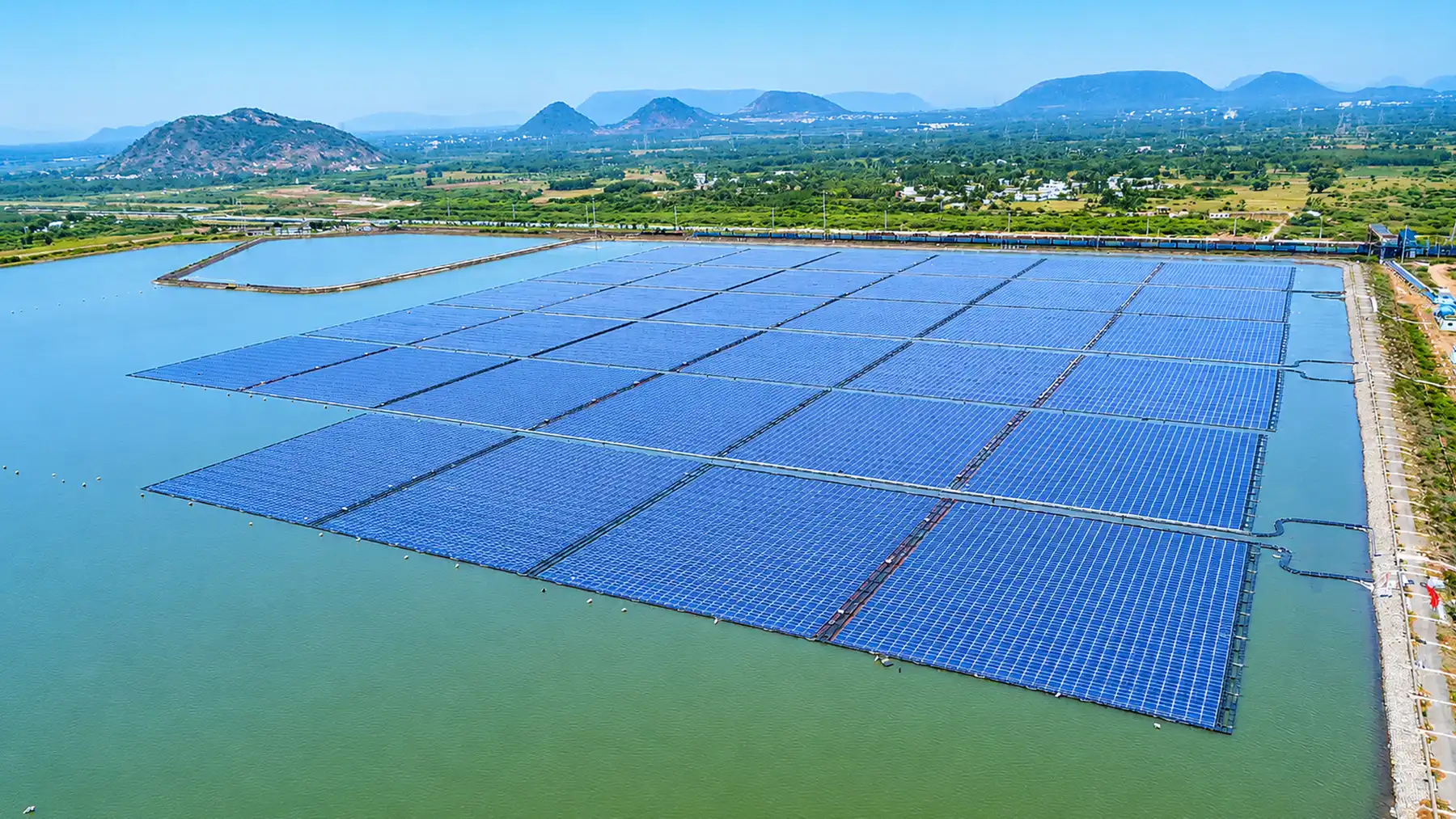
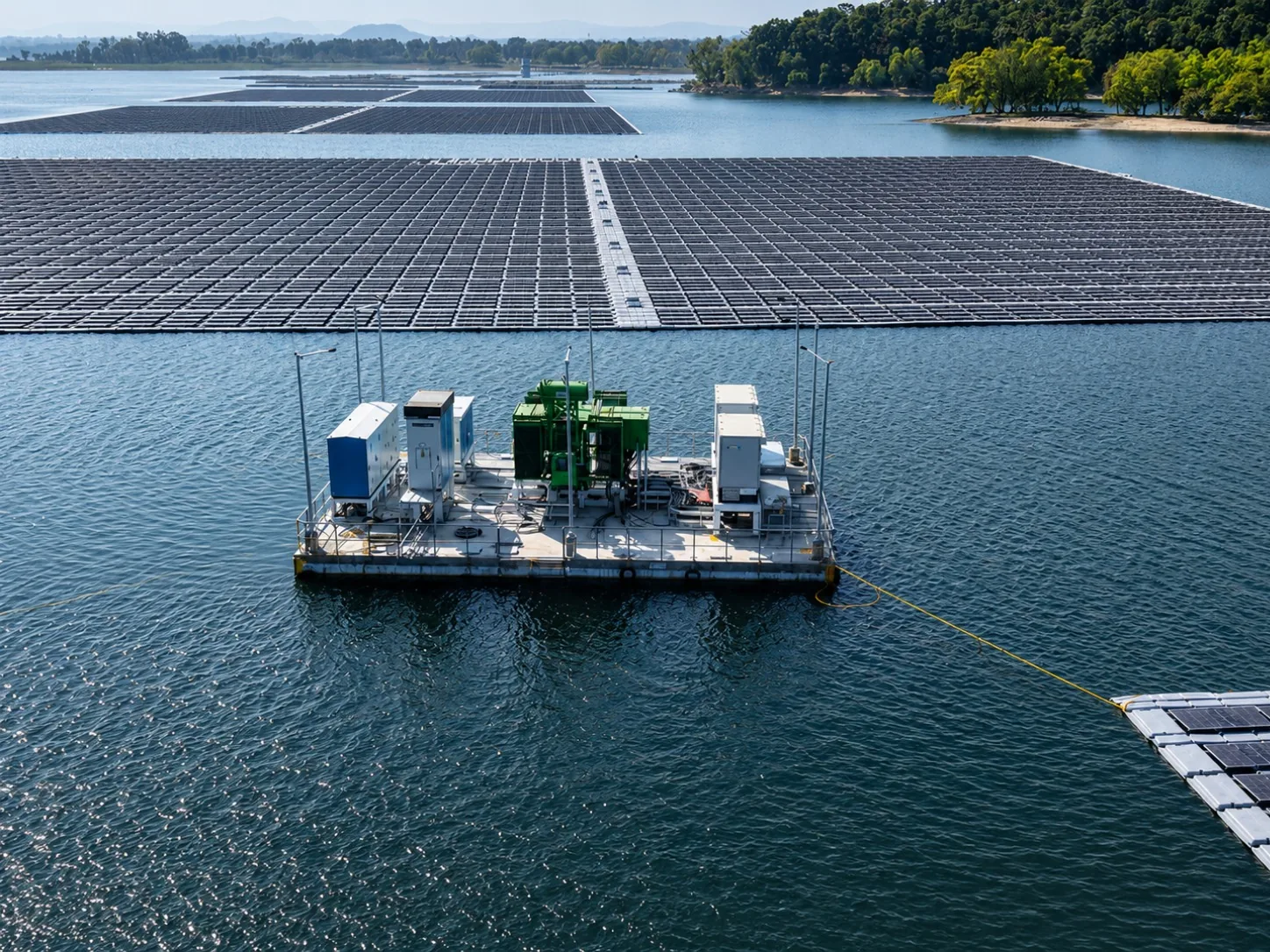
Floating photovoltaic (FPV) farms installed on reservoirs and ponds create environmental conditions that developers must take into consideration. One condition that directly affects dissolved oxygen (DO) - the oxygen available in water to support biological life - is the shading and the change in water-flow patterns around the solar panels. Understanding these floating solar dissolved oxygen dynamics is critical. Before panels are installed, an FPV project should complete a site assessment with a DO and water-quality baseline study to avoid creating hypoxic (oxygen-starved) zones beneath the array.
Why Dissolved Oxygen Matters in Floating Solar Projects
Dissolved oxygen (DO) is simply oxygen in a dissolved form in the water. It is one of the most important parameters for evaluating water quality, and it is required by all living things in the aquatic environment. According to the EPA, an oxygen concentration of less than 5 mg/L is “stressful” to fish, and less than 3 mg/L is insufficient for fish.
Low DO causes anaerobic conditions in which smelly gases form. DO below 3 mg/L will lead bacteria to produce hydrogen sulfide (the rotten-egg smell) and/or methane. On the other hand, a very high level of DO (more than 10 mg/L) causes metal corrosion. Maintaining an optimum DO level is therefore very important - a reduced level of DO might even be a violation of environmental permits.
Healthy DO levels for fisheries and water quality are good (around 5 mg/L and above), while low DO levels are harmful to fish and may cause odour and nuisance. It is essential, then, to develop plans that protect water quality from degradation by the FPV system. Understanding floating solar dissolved oxygen interactions is an important part of assessing the potential environmental impact of any floating solar project.
Key Factors That Influence DO Risk
The following are general considerations that influence floating solar dissolved oxygen outcomes and should be taken into account when designing an FPV array:
- Solar panel coverage ratio: The larger the covered area, the more shading and the less light and wind reach the water. Many pilot studies reported greater DO effects above 50% cover. To leave more water exposed, limit cover (20–40%) or stagger the rows.
- Wide spacing between panel rows: Gaps let sunlight and wind in to aid re-aeration. Floatex frequently suggests building open “corridors” into the layout to allow circulation, instead of a single continuous sheet of panels.
- Water depth: Deeper, better-mixed reservoirs are more tolerant. Bottom waters become isolated easily in shallow lakes or ponds where shading is significant. Avoid placing arrays in narrow, sheltered areas, and ensure natural currents are maintained.
- Nutrient / algal load: Eutrophication (high algae) generates oxygen during the day and consumes it at night. In a nutrient-rich reservoir, shading may actually help prevent algal blooms; however, sudden shading can trigger algal die-offs that reduce water quality. An initial ecological survey of algae / chlorophyll-a is crucial.
- Diurnal swings and baseline DO: Daily DO swings are common in some water bodies. Any decrease becomes critical if the baseline daytime DO is already low. The existing range (day and night, summer and winter) informs safe design margins.
- Inflow / outflow patterns: A pond fed by regular fresh water through a river or canal will have its oxygen replenished; a closed pond with no new inflow will not. Floats should not be placed over intakes and outlets.
- Aeration or mixing systems: Fountains, bubbler aeration and wind breaks should be able to integrate with the floating solar system.
- Climate and weather: Warmer climates have lower base DO (warm water holds less O2). On the other hand, strong winds can reduce shading effects by causing the water to swirl. Seasonal project planning should be based on local weather patterns (monsoons, stratification seasons).
These should be scored by the developer on a site-by-site basis. For instance, a static industrial pond with heavy decaying matter and high temperature would carry a higher DO risk, while a reservoir with strong monsoon inflows and no added nutrients would be considered low risk from a floating solar dissolved oxygen perspective.
Why the Impact Is Not the Same on Every Water Body
Not all water bodies are equally impacted by floating solar. Two reservoirs with the same solar cover can differ in depth, circulation and baseline water quality - and therefore produce different outcomes. A deep, well-mixed reservoir may carry 30–40% cover without significant changes to DO, while a shallow, stagnant pond may experience a dramatic drop in DO at 50% cover.
A recent modeling study highlighted the need for site-specific design, noting how factors such as depth, circulation dynamics and existing biology vary between reservoirs. In practice, a reservoir with high inflow and mixing can refill oxygen rapidly, while a closed pond can stratify and become depleted under panels. Seasonal factors matter too: some studies observed larger DO differences in summer than in winter.
In industrial or managed ponds (cooling ponds, process tanks and similar), conditions can be even more specific, and DO behaviour may be altered by engineered flows, warm effluent or chemical treatment. In some cases, researchers found that cooler water under panels could even be advantageous for certain fish species - but only with significant panel coverage.
| Water Body Type | DO Risk Level | Why It Matters for FPV Design |
|---|---|---|
| Deep, well-mixed reservoir | Low to Moderate | Natural circulation can help replenish oxygen. |
| Shallow stagnant pond | High | Limited mixing and heavy shading impact dissolved oxygen. |
| Industrial cooling pond | Site-specific | Warm discharge, engineered flows and chemical conditions change DO behaviour. |
| Ash pond / process reservoir | Moderate to High | Suspended solids, unusual chemistry and low light penetration require careful monitoring. |
What Research Says About FPV, Shading, and Water Quality
New research suggests a more complex picture around floating solar dissolved oxygen interactions:
Cornell University (2024) - manipulative study of ponds at 70% FPV
Methane and CO2 emissions increased by roughly 27%, and dissolved oxygen “substantially decreased” directly under the solar panels. Lead author Steven Grodsky cautioned that panels on small ponds “drastically reduce oxygen availability,” and the research recommended either reducing coverage or adding aerators to limit the impact.
Oregon State University (2025) - reservoir modeling
OSU modeled 11 different reservoirs and found that FPV “consistently cooled surface waters and altered water temperatures.” Cooler water under the panels can increase panel efficiency (a 5–15% gain), while ecological impacts varied. The study found no “one size fits all” design - each reservoir showed different DO and habitat changes based on its depth and circulation - and emphasized the importance of site analysis.
Lancaster University (2025) - field observations
Researchers measured three FPV sites and concluded that, under large arrays, temperature dropped by about 0.5°C. Average DO under FPV was 0.3–1.2 mg/L lower than in open water - implying that surface DO can be meaningfully reduced by less mixing and shading, which may stress aquatic life.
In-situ monitoring (2021)
Results from a 3.5 MWp FPV installed in an ash pond in South Korea showed that most water-quality parameters remained unchanged between the panels and open water, although lower water temperatures were observed under the panels. Some light and wind still passed between the floats, and the researchers noted that more long-term data are required (they focused on local results rather than generalizations).
The Core Principle
Floating solar is not automatically safe for water quality - but it is not automatically harmful either. The deciding factor is site-specific design. Measure before you design, then size coverage, corridors and mooring to keep the water oxygenated.
What Developers Should Measure Before Deployment
Floating solar developers need to perform extensive water-quality baseline monitoring before installation. A pre-deployment checklist should include:
- Dissolved oxygen (DO): Measure continuously (overnight and during the day) at several depths and locations (near shore and centre). Document seasonal extremes.
- Temperature profiles: Record surface and stratified layers across seasons. Temperature gradients matter because FPV will often cool surface water.
- pH and conductivity: Define the water chemistry (pH influences metal corrosion and organism health). Extreme pH - as in ash ponds - requires special materials.
- Algae / BOD / COD: Chlorophyll-a or algal biomass indicates oxygen-production potential, while biological and chemical oxygen demand (BOD/COD) show how much oxygen is consumed by organic decomposition.
- Nutrient load: Measure nitrogen, phosphorus and other nutrients to predict algal growth. Shading a nutrient-rich pond can trigger algal die-offs.
- Light penetration: High suspended solids reduce light penetration even before panels; heavy sedimentation in an ash pond may already make the water dark.
- Water depth / bathymetry: Map depths and basin shape. Shallow spots or ledges can worsen low-DO pockets and temperature stratification.
- Hydrology: Inflow, outflow and residence time. Identify the pipes or channels that move water in and out - and don't cover them.
- Wind / wave patterns: Record wind direction and velocity, and use fetch analysis to understand how waves mix the water. This guides anchor design and panel orientation.
- Existing aeration / mixing systems: Note any fountains, aerators or pumps, with their locations and capacities.
- Water-level change: Account for daily or seasonal water-level variation when planning floats and anchors.
| Parameter | Why It Matters |
|---|---|
| Dissolved oxygen | Confirms baseline oxygen levels before panel coverage. |
| Temperature profile | Shows stratification risk and seasonal changes. |
| Nutrients / algae | Helps predict oxygen swings and bloom-related risks. |
| Inflow / outflow | Indicates how well oxygenated water circulates. |
Design Decisions That Can Reduce Water Quality Risk
Site data can guide engineering controls that reduce floating solar dissolved oxygen impacts:
Limit coverage: Avoid high panel density. Lower overall cover (below 50%) minimises the risk of DO depletion. Where power goals demand 70%+ cover, consider smaller, phased areas.
Keep corridors open: Use a block layout with gaps. Corridors let wind and light reach the water for better mixing - for example, leaving 5–10 m access lanes between rows of panels as air and light channels.
Use float geometry that aids flow: Float shapes that encourage water movement underneath help maintain mixing. Floatex's HDPE pontoons are designed to allow water to flow through and around the structure.
Custom mooring layout: Space anchors and mooring lines to avoid stagnating currents. Floatex's anchoring designs provide stability without over-constraining the system, allowing gentle drift that helps stir the water beneath.
O&M measures: Install water-quality sensors that feed back DO and temperature data, and keep mitigation on hand (such as solar-powered aerators / bubblers) for problem areas. When DO falls below design targets, aeration units or coverage changes can restore healthy conditions.
Modular deployment: Build in stages. Observe early-phase effects and optimise array density for later phases - a phased strategy avoids costly surprises.
Material selection: For harsh water, use corrosion-resistant materials for anchors and floats. Floatex's HDPE floats are chosen for chemical inertness and durability across a range of water chemistries.
Access and walkways: Plan maintenance routes so staff can reach the water and clean floats when needed - for example, when biofouling or ash build-up becomes a problem. Modular access systems make this safer and faster.
Floatex Solar's Perspective: Design Before Deployment
At Floatex, we build FPV projects designed to last for decades, and our process begins with engineering and surveying the site. During pre-feasibility we perform comprehensive bathymetric surveys, wind-wave studies and water-quality testing, so our team can shape the exact array design around depth contours, seasonal water levels, and existing DO and nutrient profiles.
On larger projects such as NTPC Ramagundam and Omkareshwar, that data enabled our engineers to optimise panel spacing and placement. The floats and pontoons for each reservoir are made from durable HDPE, selected to match the specific water chemistry and wave conditions of the site. Custom mooring systems keep the array stable against changing water levels and wind forces while minimising their effect on natural mixing.
To Floatex, floating solar dissolved oxygen challenges are a reminder that FPV is sophisticated infrastructure. Every project - from a 21 MW NTPC cooling canal to an industrial reservoir - involves feasibility studies, fluid modeling and modular construction. By planning before deployment and adapting to site conditions, Floatex ensures floating solar can produce clean power without compromising aquatic health.
Final Takeaway
Developers shouldn't be dissuaded from floating solar by DO concerns - but they should treat each water body individually. Risk can be managed through proper baseline studies and an engineering-led design. Floating solar is not automatically safe for water quality, so the trade-offs must be considered: FPV can reduce evaporation and heat stress, but it can also lower DO if implemented excessively.
In practice, this means measure before you design. Use water-condition monitoring and checklists, and create array layouts (spacing, floats, anchors) that keep the water oxygenated. Where gaps remain, aerate or reduce cover. Developers who follow an engineering due-diligence process can capture the benefits of floating solar with minimal ecological impact.
Developers considering floating solar for reservoirs, ponds or industrial water bodies can work with Floatex Solar to assess site conditions, design floating platforms for maximum performance, and plan a deployment built for long-term success. To protect both environmental and operational outcomes, talk to the Floatex engineering team before finalizing your floating solar layout.
Sources
- Grodsky et al., “Immediate Effect of Floating Solar on Greenhouse Gases in Ponds” (Environ. Sci. Tech., 2024) - Cornell / EurekAlert summary.
- Cagle et al., “Floating PV decreases water temperature and near-surface DO” (Envir. Res.: Infra. & Sustain., 2025).
- Bredeweg et al., “Environmental impacts of floating PV vary by location” (Oregon State University News, 2025).
- EPA, “Dissolved Oxygen” indicator page (importance of DO for aquatic life).