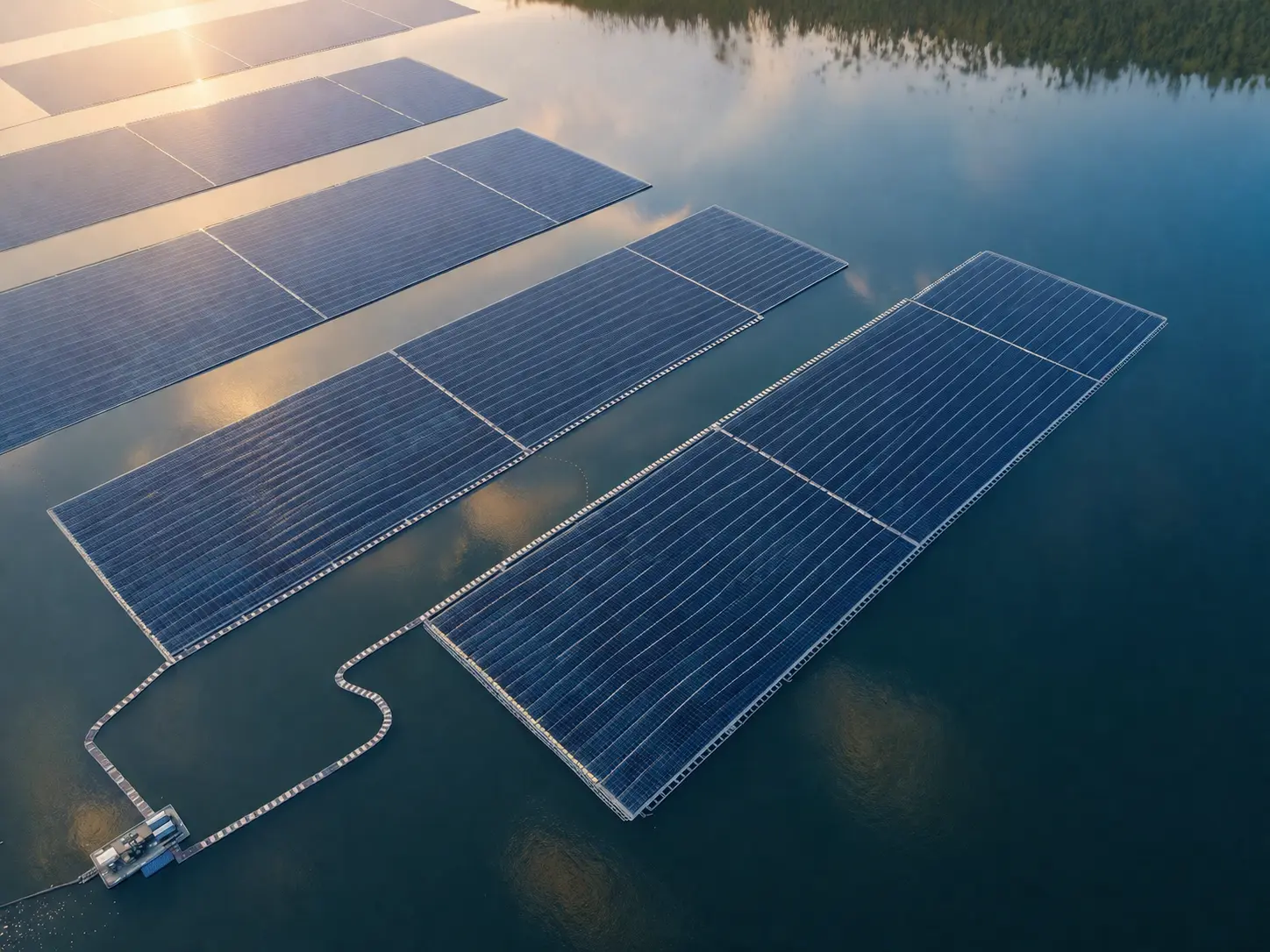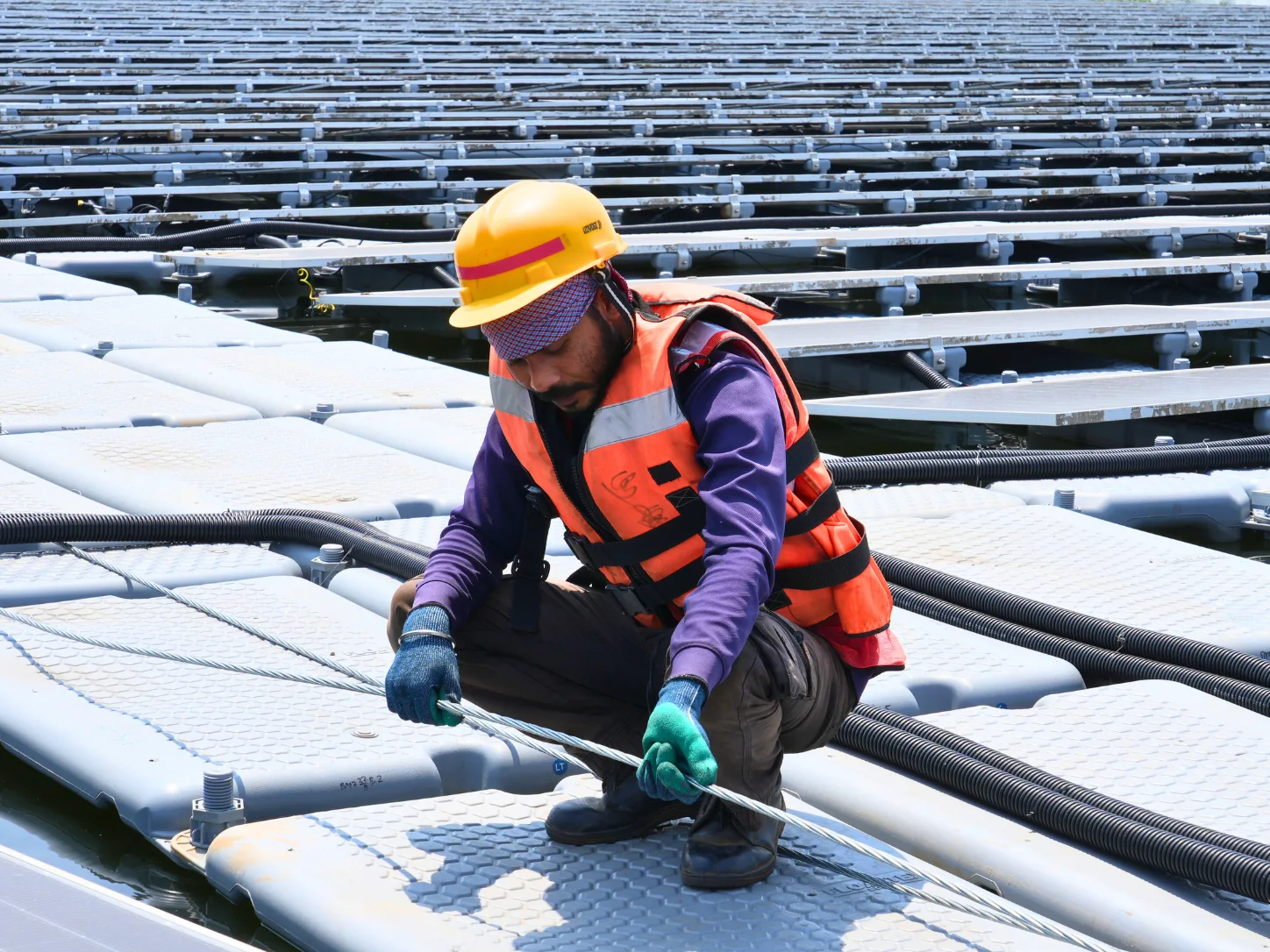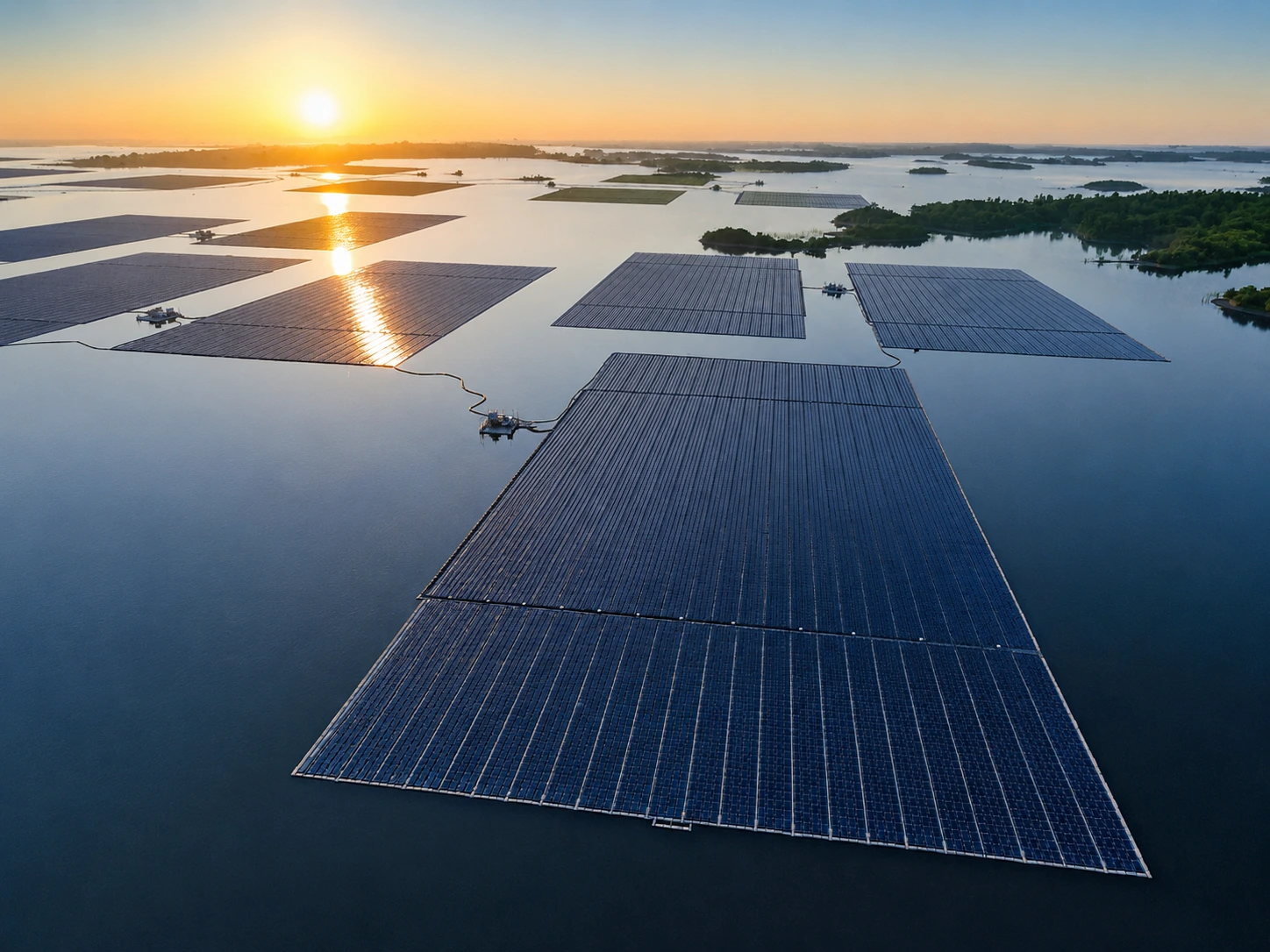
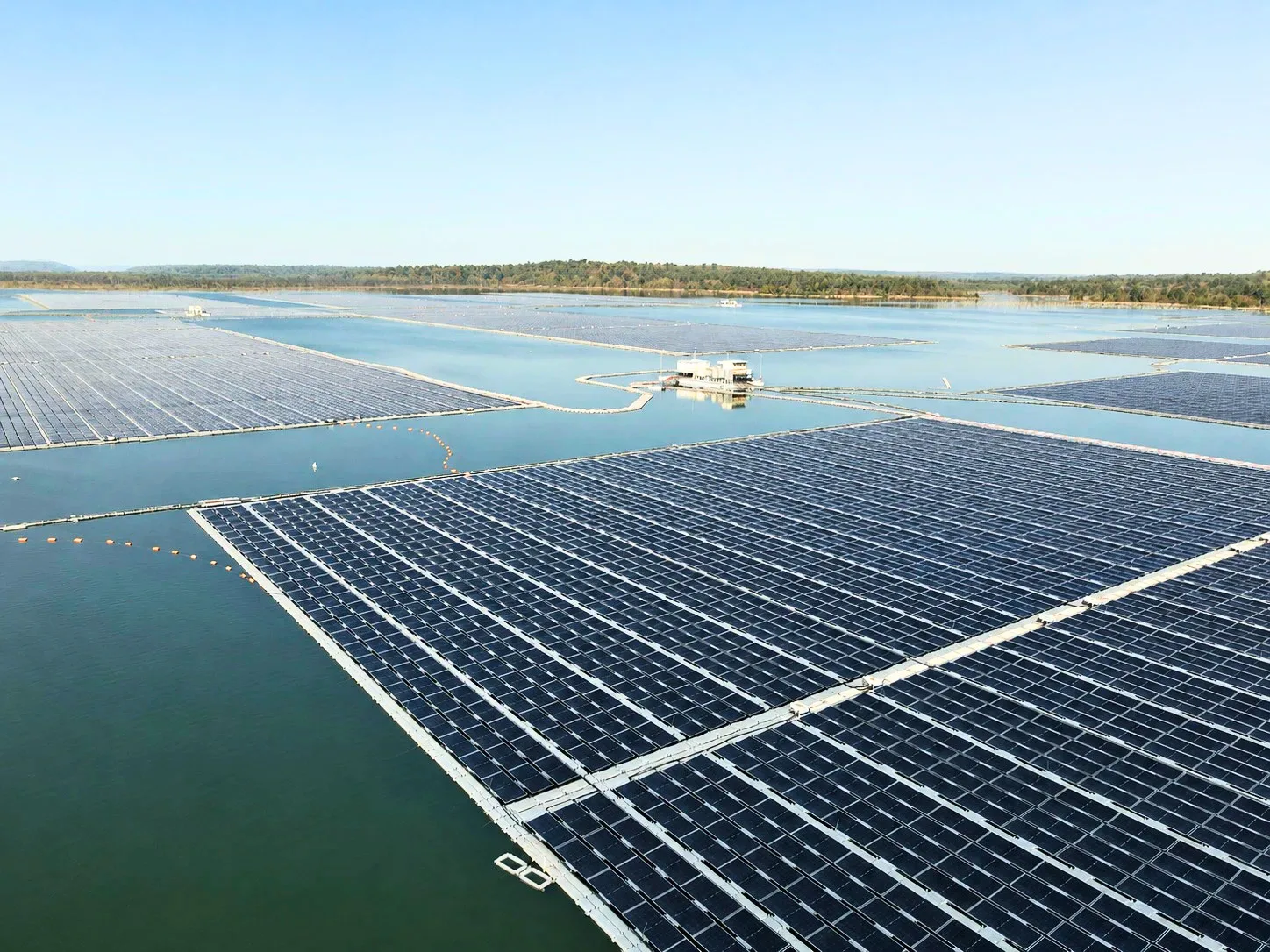
Once a floating solar farm is up and running, the engineering task changes. During the construction phase, the emphasis is on float installation, array installation, securing the system and energizing the plant. But once the farm is installed, the question is: how do we make sure all these systems work in coordination for the next 20 years?
Floating Solar O&M becomes critical at this stage, as the long-term performance of the plant depends on how effectively the systems are monitored, inspected and maintained.
O&M practices used for ground-mounted solar farms cannot simply be replicated in Indian reservoirs. Though the modules are familiar, fluctuating water levels, monsoons, limited accessibility, and the mobility of the platform and mooring system over water present technical challenges.
We consider O&M during the design of the plant since its layout will determine the ease of inspection and maintenance in the future. This approach is also important for an effective Floating Solar O&M strategy over the operating life of the plant.
O&M extends far beyond module cleaning
Module cleaning and inverter maintenance remain part of the programme, but floating solar introduces another layer of mechanical and marine inspection.
A utility-scale O&M plan needs to cover the complete system:
| System | What the O&M team is watching |
|---|---|
| PV modules | Soiling, damage, hotspots, connectors and output |
| Floats and walkways | Cracks, deformation, alignment, joints and buoyancy |
| Mooring lines | Tension, abrasion, fatigue, corrosion and movement |
| Anchors | Position, connections and evidence of movement |
| DC and AC cables | Support, bending, abrasion, insulation and terminations |
| Inverters and transformers | Alarms, thermal condition, protection and servicing |
| SCADA and communications | Data quality, alarms, sensors and communication loss |
| Shore infrastructure | Cable transitions, erosion, vegetation and access |
O&M is one of the aspects where the IEA PVPS considers floating PV different from ground-mounted PV, as exposure to water, movement and floating PV-specific failure modes affects its maintenance needs. Moreover, it states that monitoring and automation would be important for reducing operational costs and identifying stressors in FPV.
The mooring system needs its own inspection programme
The mooring system controls where the plant sits and how it responds to wind, waves and water-level movement. Its condition therefore affects more than the anchors themselves.
We look for changes in:
- Mooring-line tension and geometry
- Abrasion at contact points
- Corrosion of metallic hardware
- Wear at shackles and connectors
- Uneven movement between floating blocks
- Anchor or attachment-point displacement
- Cable behaviour near mooring routes
Larger-scale arrays can move differently across exposed and sheltered areas, and these differences in movement and restraint can redistribute forces across the array. Therefore, it is important to pay attention not only to damage but also to trends during the inspection process. Changing alignment and/or line behaviour could signal some problems arising before any failure occurs.
A robust Floating Solar O&M programme therefore needs to track these changes over time rather than relying only on periodic checks for visible damage.
Electrical systems often reveal movement first
One of the biggest differences in operating and maintaining the two systems can be found in the cables.
The floating arrays will move continuously within the limits imposed by the mooring system. Fluctuations in reservoir level may impact the geometry between floating array elements and shore facilities.
Cable movement is particularly important at DC cable transitions, junction boxes and floating-fixture terminations, among other points. This is why engineering experience has shown the need to understand cable movement as part of the plant's mechanical behaviour, not just its electrical performance.
Cable supports, transition loops, glands, connectors and areas where cables may rub against other structures must be inspected. Other sources of information include insulation testing and SCADA alarms.
These checks form an important part of Floating Solar O&M, particularly because electrical issues can provide early indications of movement or mechanical stress elsewhere in the plant.
Indian reservoirs require a seasonal maintenance strategy
Maintenance tasks should not be distributed evenly across a 12-month schedule for a large reservoir in India.
The water level, accessibility, debris loading, and working conditions vary very quickly during the monsoon season. In dry periods, different portions of the shore may become visible, while the geometry of cables and mooring systems may change.
This information is particularly useful for maintenance planning.
Before the monsoon
Priorities include mooring condition, drainage, electrical enclosures, cable support, shore access, communications and emergency equipment.
During high-water and severe-weather periods
Remote monitoring becomes more important. Teams track array movement, alarms, electrical output and unusual changes while controlling on-water work according to site conditions.
This seasonal approach is central to effective Floating Solar O&M, as maintenance planning for large Indian reservoirs needs to account for changing water levels, monsoon conditions and accessibility throughout the year.
After major weather or reservoir events
Before resuming inspections, it is necessary to make sure that there is no misalignment, debris, mooring or cable movement, float damage, or shoreline erosion.
CEA lays down safety standards for the operation and maintenance of electrical plants and electric lines in India, forming part of the broader safety framework for electricity.
Access determines how long a fault lasts
In cases where the fault occurs in components outside the waterbody or very close to the shoreline, a service vehicle may be sufficient to access the faulty component. However, if the fault occurs several hundred metres from the shore, another approach would be required.
There would also need to be clearly defined areas for plant maintenance, walkways, boats, PPEs, transportation of tools and spares, and rescue operations.
The design of the plant is also influenced by its accessibility. Maintenance access must be designed with the understanding that systems that are not easily accessible cannot be easily inspected or restored. We have seen this direct relationship between platform performance, maintenance and access repeatedly in our large engineering projects.
The O&M team also needs to have a clear plan for replacing large pieces of equipment. Getting to an inverter is one thing; replacing it is another. There needs to be enough space in the layout for the transformers, switchgear and utility platform.
For Floating Solar O&M, this accessibility becomes particularly important because the location of a fault and the conditions on the water can directly affect how quickly technicians can reach, repair and restore the affected equipment.
SCADA should tell the maintenance team where to look
Manually inspecting the panels will not be effective in a large-scale reservoir.
The search needs to be narrowed down further using SCADA and plant monitoring systems that can alert us to unusual inverter behaviour, string losses, communication failures, protection events and changes in plant performance.
The objective here is not to replace technicians with a dashboard but to use operational data to guide decisions about where and how to begin physically examining the facility.
For our GAIL floating solar installation, performance, weather and safety monitoring are part of the electrical layout and are incorporated into our operations and maintenance strategy, including the inspection of the floating platform, anchoring and mooring systems.
Over time, linking alarm history to inspection records could provide valuable insights. Alarms from cables in the same block, repeated connector damage or recurring mooring issues might indicate a systemic problem rather than a component failure.
This integration of monitoring and physical inspection is a key part of effective Floating Solar O&M, helping the maintenance team identify where attention is required instead of relying only on routine physical inspection.
O&M records should feed the next project
Inspections provide engineering data.
More than just “inspected – OK” is valuable. The record should contain a list of what was inspected, the condition of those components, changes from the last inspection (if any), and the action taken.
That means maintaining records for:
- Mooring and anchor condition
- Float and connector observations
- Cable and electrical inspections
- Equipment failures and replacements
- SCADA and alarm history
- Major weather events
- Photographs of critical interfaces
- Corrective actions and recurring faults
As floating PV installations grow in size, according to IEA PVPS, there is a growing need for greater knowledge of floating-PV reliability through advanced monitoring, automation of O&M processes and the sharing of more operational information.
This information is particularly valuable because it can inform the design of future projects. Future cable, walkway, connector and mooring-system layouts should be designed based on observations made by maintenance personnel during operations.
This makes Floating Solar O&M records more than a maintenance history; they can also provide practical engineering inputs for the design and operation of future projects.
Operating the reservoir as one system
A Floating Solar O&M programme is not one in which the modules, floats, moorings and electrical components are maintained independently.
There is interaction between the systems.
Cabling is influenced by mooring motion. Float alignment makes it more or less difficult to access. Transition from shore is dependent on the water level of the reservoir. The access design influences repair time. Through SCADA, the team can identify changes in performance and then use physical inspections to determine their cause.
This is why we integrate Floating Solar O&M into our projects from the design stage rather than implementing it after commissioning.
The successful operation of a large floating solar plant on an Indian reservoir depends not only on understanding the aging of individual components, but also on the overall behaviour of the floating system across changing seasons and throughout its operational life cycle.