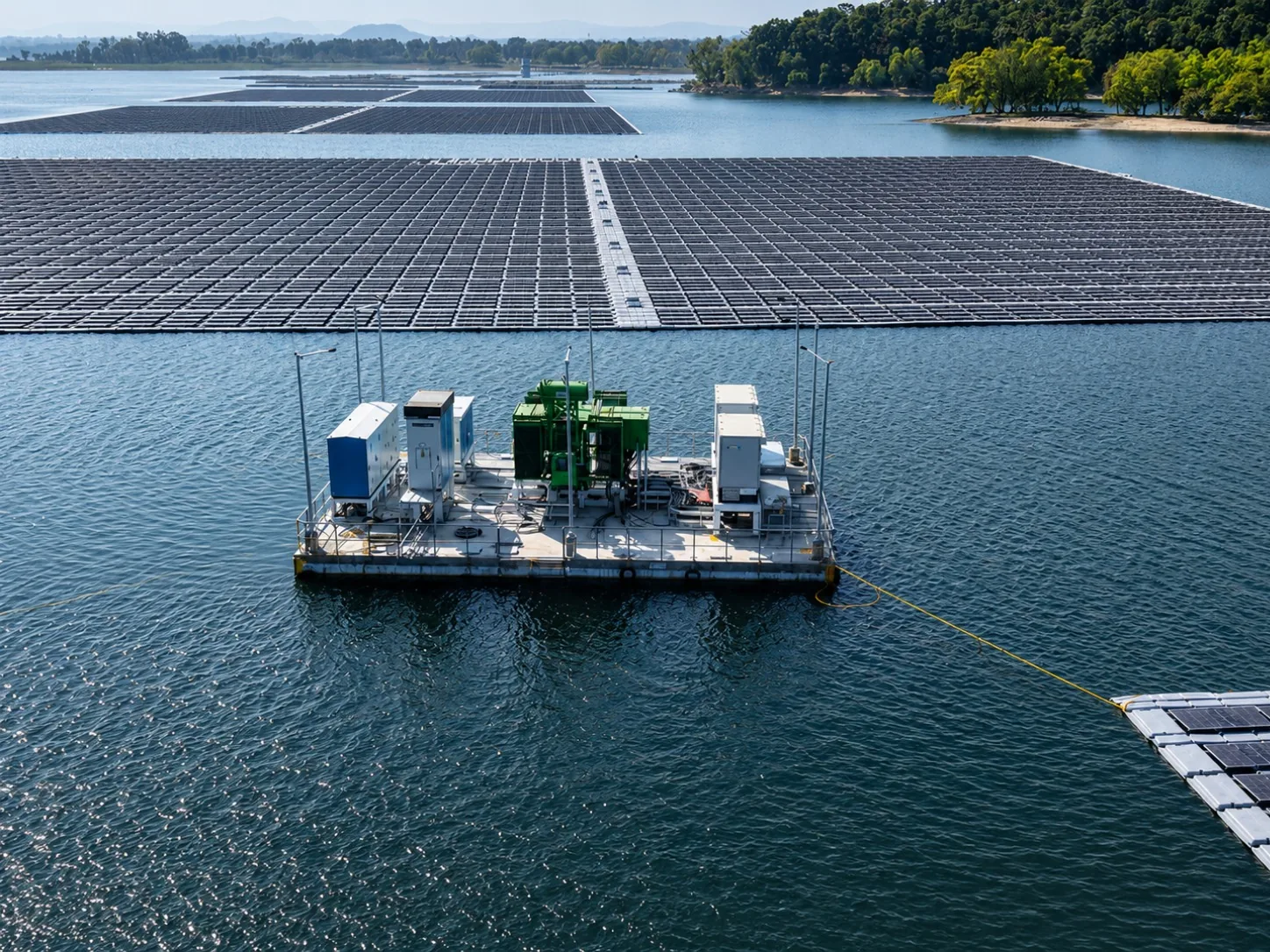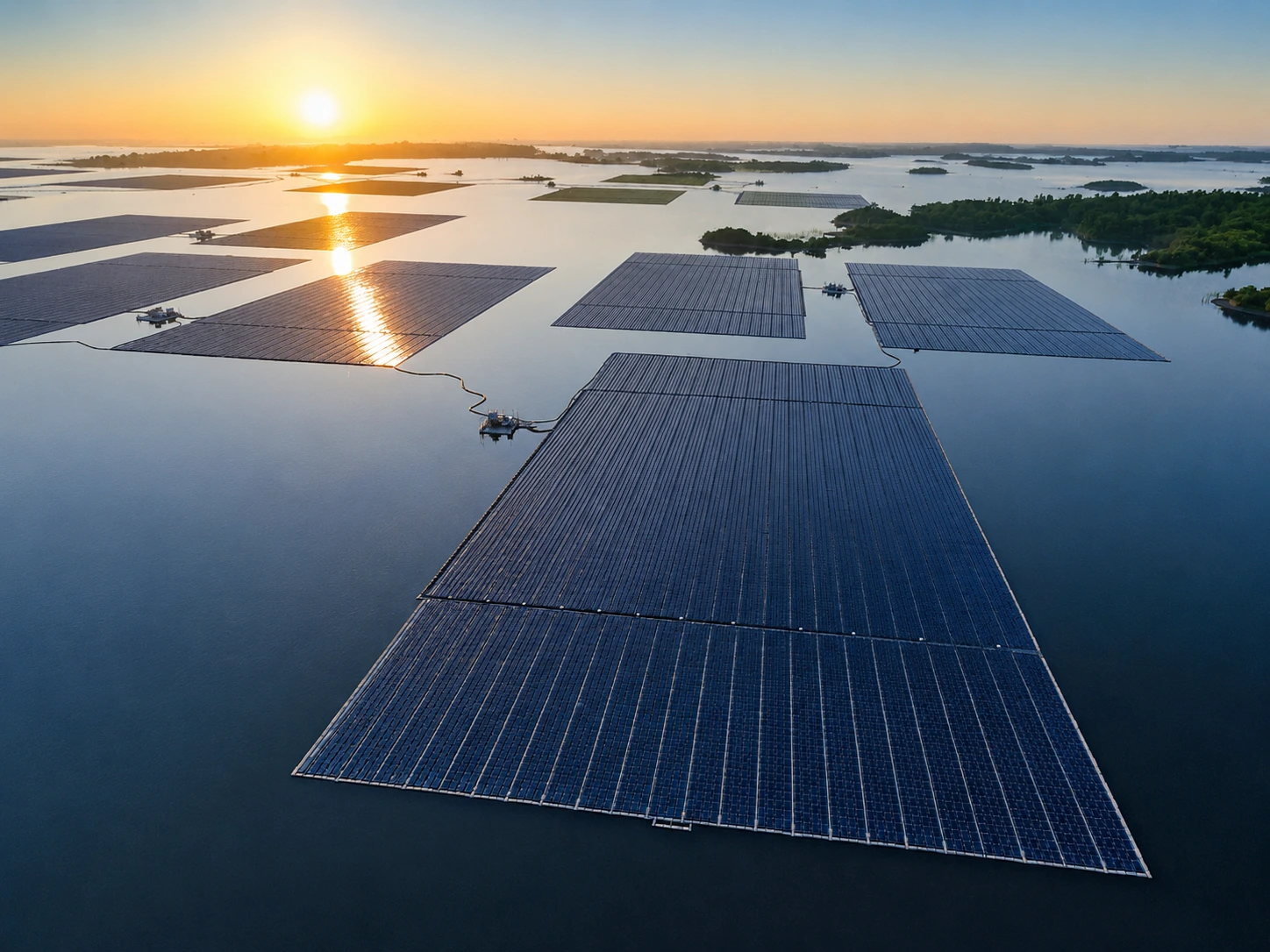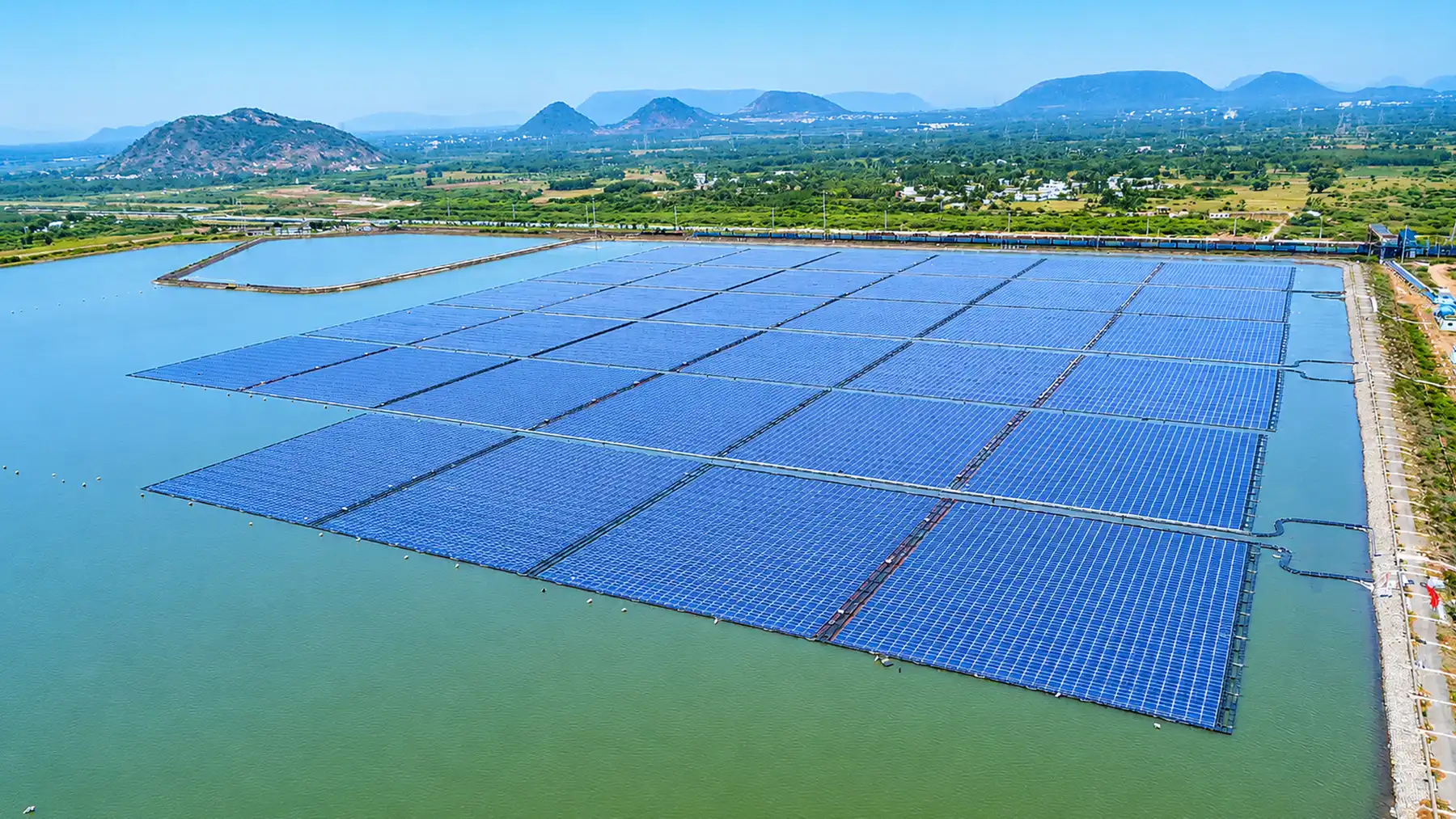
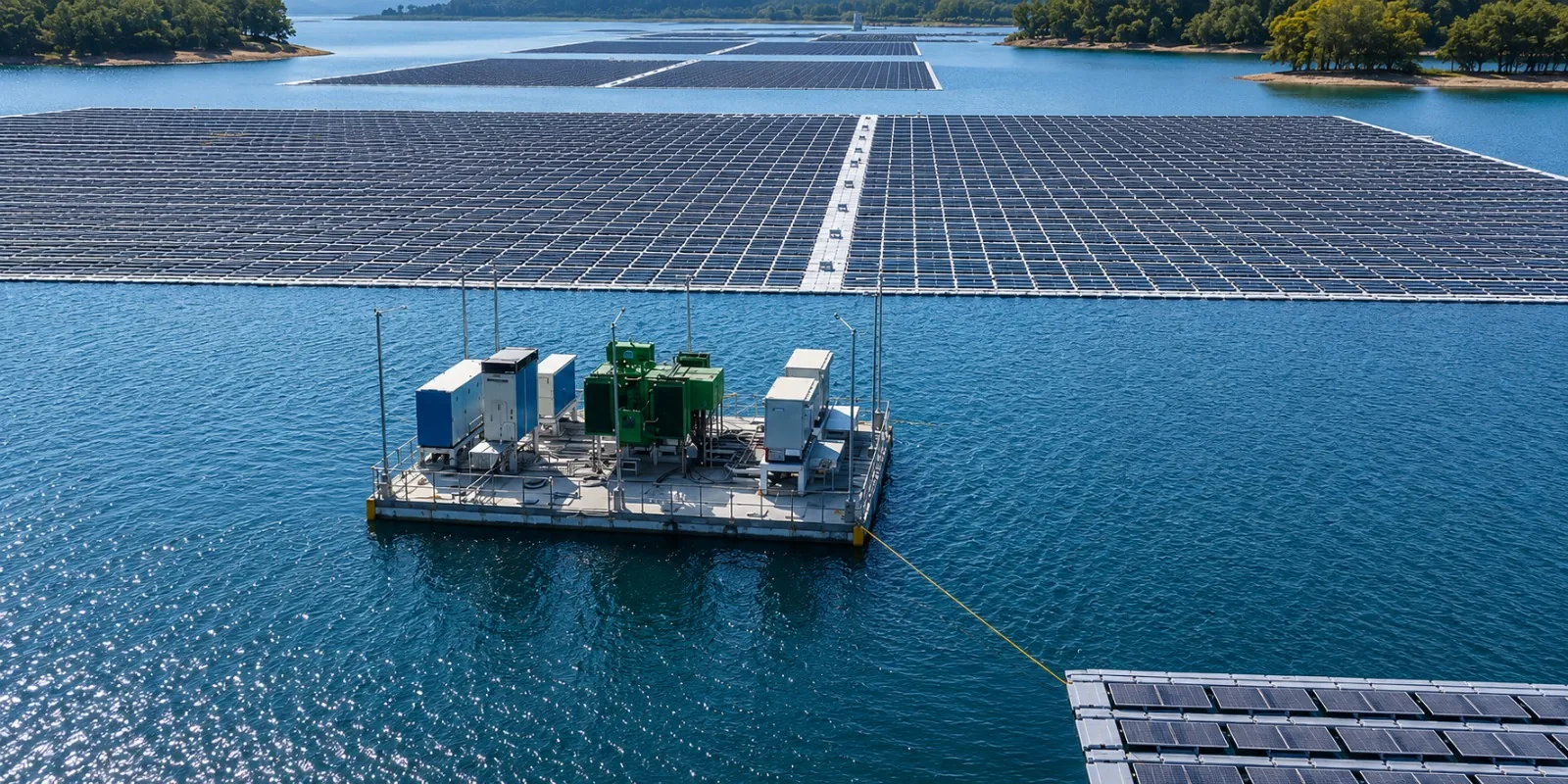
In industrial facilities, available water surfaces seem like ideal candidates for solar installations. These large, underutilized water bodies come in many forms - ash ponds, cooling ponds, process reservoirs, rainwater ponds, settling ponds and raw-water reservoirs. But from an engineering perspective, these are not simply “blank” water bodies. They are infrastructure systems that are part of the plant's operating environment.
An ash pond may be tied to coal-ash handling and sediment settling. A cooling pond may be responsible for heat dissipation. A process reservoir may support production, treatment, reuse or storage. The chemistry, depth profile, temperature response, operating constraints, access conditions and anchoring requirements vary significantly from one water body to another. This is why floating solar on industrial water bodies requires a different design logic than floating solar on traditional reservoirs or lakes.
At Floatex Solar, we do not view floating solar as merely a PV array floating on water. We view it as an engineered infrastructure system. The question is not only, “How many megawatts can fit on this surface?” The more important question is, “What design approach does this water body require for safe, reliable and long-term operation?”
Why Industrial Water Bodies Are Attractive for Floating Solar
Industrial sites are attractive locations for floating solar because three key elements often exist in one place: water surface area, captive power demand and electrical infrastructure.
Floating solar on industrial water bodies can reduce the burden of land acquisition at large facilities such as thermal power plants, refineries, cement plants, steel plants and manufacturing units. Instead of requiring additional land for solar development, these projects repurpose existing water surfaces that are already part of the facility.
Industrial floating solar systems can also be installed close to load centres. Depending on the project model, they can support captive consumption, behind-the-meter renewable strategies, open-access arrangements, or integration with existing electrical infrastructure. For companies pursuing renewable procurement targets, decarbonization goals or ESG objectives, industrial water-body solar offers an effective way to deploy solar power without using valuable operational land.
However, not all industrial water bodies are suitable for floating solar. Suitability depends on site assessment, water-body function, water chemistry, bathymetry, sediment behaviour, safety regulations, bank conditions, installation accessibility and long-term O&M feasibility.
Why Industrial Floating Solar Is Not a One-Size-Fits-All Project
“Industrial water body” is a broad category. It can include:
- Ash ponds
- Cooling ponds
- Process reservoirs
- Effluent ponds
- Mining ponds
- Settling ponds
- Raw-water reservoirs
- Stormwater storage ponds
- Industrial rainwater harvesting ponds
A floating solar design that performs well on a calm freshwater reservoir cannot simply be copied onto an industrial pond. The design must respond to site-specific conditions such as depth variation, water-level fluctuation, water chemistry, sediment or pond-bed behaviour, temperature profile, wind and wave exposure, bank stability, intake and outfall structures, restricted zones, plant safety rules, electrical routing limitations, installation logistics and O&M access requirements.
The Design Principle
The floating system must be designed around the water body - not the other way around. This is the central principle behind floating solar on industrial water bodies.
Ash Ponds: Sediment, Chemistry, Access and Anchoring Challenges
Thermal power plant environments often have many ash ponds, generally used for ash handling, settling or storage. An ash pond can present settled fly ash, slurry zones, variable water depth, soft bed conditions and changing surface characteristics, depending on the plant and how the pond is used.
The initial engineering challenge is often not the placement of the modules in a floating solar ash-pond project. It is whether the water body can sustain a stable floating platform and mooring system over the lifetime of the project.
Sediment and Soft Bed Conditions
The bed conditions of ash ponds may be soft, unstable or nonuniform. In certain areas, ash deposits behave differently from natural reservoir soil, which affects anchoring feasibility. Bottom anchoring may be harder where the bed does not offer adequate holding power; elsewhere, bank anchoring or a hybrid approach may be better suited. The correct approach depends on bathymetry, sediment behaviour, bank condition, water-level variation and load calculations.
Variable Depth
The depth profile of ash ponds tends to be irregular - shallow in some areas due to sedimentation, deeper in others. There should be no areas where low-water conditions could ground the floats or where anchoring lines cannot be safely set. A detailed bathymetric survey clarifies usable areas, prohibited areas, shallow pockets, obstructions and potential anchoring corridors.
Water Chemistry
The pH, suspended solids, dissolved solids and chemical composition of ash-pond water may differ from a typical freshwater reservoir - a key factor when selecting materials. Floats, fasteners, cables, connectors, anchors and protective systems should be evaluated with actual water-quality data. For industrial applications, material compatibility is not a theoretical issue; it has a direct impact on long-term performance and maintenance planning.
Access and Safety
Ash ponds may be closed to the public, have shifting banks, few approach roads, or safety limits in certain areas. Installation and maintenance routes must be planned before the final layout is frozen. The question that must be asked for ash ponds: where in the pond can floating infrastructure sit for 25 years without harming the pond's function?
Cooling Ponds: Thermal Behaviour and Plant Operations Matter
Cooling ponds are not “passive” water bodies. They are components of the plant's heat dissipation structure, used to absorb, release or control heat from the industrial process. Designing floating solar on a cooling pond is quite different from conventional floating solar on reservoirs.
Elevated Water Temperature
Cooling ponds can run hotter than natural or storage ponds. High water temperature can affect the operating environment around the floating platform, module backsheet conditions, worker comfort, material exposure and maintenance planning. The HDPE floating unit and its structural, electrical and mooring accessories must be chosen with thermal strength in mind.
Thermal Gradients
Cooling ponds are typically zoned in temperature. Areas near discharge points can behave differently from intake zones or outer pond areas. These thermal gradients should be built into the floating solar layout, rather than assuming uniform thermal behaviour across the pond.
Cooling-Function Protection
The pond's heat-dissipation capacity must not be hindered by the floating solar system. Coverage ratio, array spacing and exclusion zones should be planned in conjunction with the plant's thermal requirements. An array can pose an operating risk to the facility if it interferes with circulation, with heat exchange at the surface, or with intake/outfall behaviour.
Intake and Outfall Protection
Intake channels, discharge points, pump houses, flow paths and hydraulic zones are essential components of cooling ponds that can be critical to plant operation. These spaces must be well defined and safeguarded. Mooring lines, floating blocks, cable routes and access corridors should avoid the plant-critical water-movement zones. The rule of thumb for cooling ponds: floating solar must be designed around the thermal and operational logic of the pond.
Process Reservoirs: Water Chemistry, Level Variation and Operational Constraints
There are many types of process reservoirs in industry. They can hold water for production, treatment, reuse, plant utilities and washing. A process reservoir in a refinery will not behave like one in a cement plant, steel plant, chemical plant or manufacturing unit. This variability makes floating solar highly site-specific when process reservoirs are involved.
Chemical Exposure
Process reservoirs can contain dissolved solids, suspended solids, oils, organics, treatment residue or fluctuating pH, depending on the facility. All float systems, cables, connectors, anchoring materials and inspection schedules should be assessed against site-specific conditions. Because of their buoyancy, durability and suitability for water-based infrastructure, HDPE floats are widely used for floating solar - but industrial water chemistry must be reviewed before the design is finalized.
Water-Level Fluctuation
The level in a process reservoir can change due to drawdown, refill, operational requirements or sudden shifts in production demand. The mooring design must be flexible enough to adjust to these changes without damaging the floating platform or the mooring-to-shore connection.
Operational Dependency
Unlike a normal reservoir, a process reservoir can be directly tied to plant operation. Installation and shutdown periods, safety permissions and maintenance access may have to fit within production timelines.
Restricted Zones
Pump houses, intakes, discharge points, aeration systems, treatment equipment, pipelines and plant roads can all reduce the technically usable surface area. A large surface on the satellite view may be much smaller after exclusion mapping. With process reservoirs, the design concept is clear: the water body is part of the plant's operating system, so the floating solar design should be developed around the operational requirements of the facility.
Ash Pond vs Cooling Pond vs Process Reservoir: Design Comparison
| Water Body Type | Typical Industrial Use | Main Technical Challenge | Design Implication | What Floatex Solar Evaluates |
|---|---|---|---|---|
| Ash pond | Ash handling, settling or storage | Sediment, soft bed, variable depth, chemistry, restricted access | Bathymetry-led layout, zone exclusion, material compatibility, custom anchoring strategy | Depth profile, bed condition, water chemistry, bank access, mooring feasibility |
| Cooling pond | Heat dissipation or cooling | Thermal zones, intake/outfall areas, circulation, operational restrictions | Coverage planning, exclusion zones, cooling-function protection, current-aware mooring design | Temperature profile, circulation, plant-critical zones, anchoring loads, access windows |
| Process reservoir | Industrial water storage, treatment, reuse or process support | Chemical exposure, level variation, pump/discharge interfaces, plant dependency | Material compatibility, flexible mooring, safe cable routing, O&M access planning | Water chemistry, level variation, restricted zones, shutdown windows, cable routing |
Developer Assessment Matrix for Industrial Floating Solar
Before designing the floating platform, developers should assess the water body as an engineering environment.
| Assessment Area | Why It Matters | What to Check Before Design |
|---|---|---|
| Bathymetry and depth variation | Defines usable zones and anchoring strategy | Depth survey, contours, shallow pockets, obstructions |
| Water-level fluctuation | Affects mooring loads and shore transition | Seasonal range, drawdown, refill cycles, low-water conditions |
| Water chemistry | Influences material selection and maintenance | pH, TDS, suspended solids, salinity, oils, process residues |
| Sediment or pond-bed condition | Determines bottom anchoring feasibility | Soft bed, settled ash, sludge, subsoil profile |
| Intake / outfall zones | May be plant-critical exclusion areas | Flow paths, hydraulic influence, recirculation risk |
| Wind and wave exposure | Drives structural and mooring loads | Design wind, fetch, wave height, local gusts |
| Bank stability | Important for shore anchoring and cable landing | Erosion, slope stability, civil anchor feasibility |
| Installation access | Affects deployment method and project schedule | Staging area, crane movement, launch points, road access |
| Electrical evacuation route | Impacts interconnection cost and safety | Cable path, inverter location, shore transition, isolation needs |
| O&M access | Determines long-term maintainability | Walkways, inspection corridors, boat access, rescue access |
| Safety and restricted zones | Reduces usable surface area | Permits, PPE rules, hot-work restrictions, no-go areas |
Developer Checklist Before Designing Industrial Floating Solar
Before final layout optimization, the developer, EPC team or site owner should confirm:
- Water body type and operational purpose
- Bathymetric survey
- Water depth variation
- Water-level fluctuation
- Bed or sediment condition
- Wind and wave conditions
- Water chemistry
- Temperature profile
- pH and corrosive exposure
- Suspended solids and turbidity
- Intake and outfall locations
- Pumping or discharge zones
- Restricted and safety zones
- Bank stability
- Installation access
- Crane and material movement access
- Electrical evacuation route
- Cable routing
- O&M walkways and access corridors
- Emergency access
- Plant shutdown requirements
- Regulatory and environmental constraints
- Long-term monitoring plan
This assessment should happen before capacity assumptions are finalized. In industrial floating solar, the technically usable area may be much smaller than the visible water surface area.
Why Early Feasibility Matters More for Industrial Water Bodies
A large water surface does not automatically translate into a viable floating solar project. Feasibility depends on:
- Usable surface area
- Anchoring options
- Water-body operation
- Water chemistry
- Depth variation
- Installation access
- Electrical evacuation route
- Plant safety rules
- Environmental and regulatory constraints
- O&M practicality
- Expected maintenance cost
- Long-term system durability
A well-designed feasibility study can eliminate a host of errors in capacity estimation, layout selection, anchor placement, cable routing, access and unforeseen O&M costs. In industrial projects, feasibility is not optional - it is where the actual design logic for the project is created.
Floatex Solar's Perspective: Design the Floating System Around the Water Body
From our experience at Floatex Solar, every water body is unique in utility-scale and industrial floating solar projects. Understanding the site is always the first step in our process - even before the layout is developed. Our floating solar services include HDPE float manufacturing, feasibility study, site analysis, engineering design, anchoring and mooring design, installation assistance, project supervision and on-water performance planning.
Floatex Solar brings real-world experience across large-scale, complex water-body applications, with 1GW+ floating solar executed, 14+ systems delivered, and 550MW+ annual production capacity at a 25+ year design life. Floating solar projects such as NTPC Ramagundam, NTPC Kayamkulam, NTPC Simhadri, NTPC Kawas, Omkareshwar, BPCL, Dalmia Cement, Jindal, Avaada, Tata Omkareshwar and AMP Omkareshwar have been deployed in the public domain.
The lesson from this experience is clear: industrial floating solar must be engineered around site realities. Our approach typically includes:
- Understanding the water body's operational purpose
- Identifying usable and restricted zones
- Assessing depth, wind, water-level variation, chemistry, sediment and access
- Designing the float platform and mooring system accordingly
- Planning installation around site logistics and safety rules
- Designing O&M access from the beginning
- Supporting deployment with long-term reliability in mind
For industrial water bodies, this engineering-first approach is essential.
Final Takeaway
Floating solar on industrial water bodies can be an excellent way to utilize existing water surfaces, but it requires specialized engineering and design thinking. Ash ponds, cooling ponds and process reservoirs may all look like available water surfaces - yet each carries a different engineering risk. Ash ponds raise issues of sediment, chemistry, access and anchoring. Cooling ponds need thermal and operational protection. Process reservoirs bring chemistry, level change and plant-specific safety restrictions.
A successful industrial floating solar project requires optimizing the floating platform, mooring system, anchoring system, layout, electrical routing and O&M plan for that specific water body. Among industrial developers, the question should not just be “Can floating solar be located here?” It is: What is the right design for this water body?
For organizations considering floating solar on industrial water bodies - including ash ponds, cooling ponds, process reservoirs or other industrial water assets - Floatex Solar can support feasibility evaluation, system sizing, floating-platform design and deployment planning based on actual site conditions.