Composite construction
Portland cement mortar is applied in thin, controlled layers over a closely spaced steel mesh armature. Unlike bulk concrete, ferrocement relies on mesh distribution, not mass, for structural integrity.
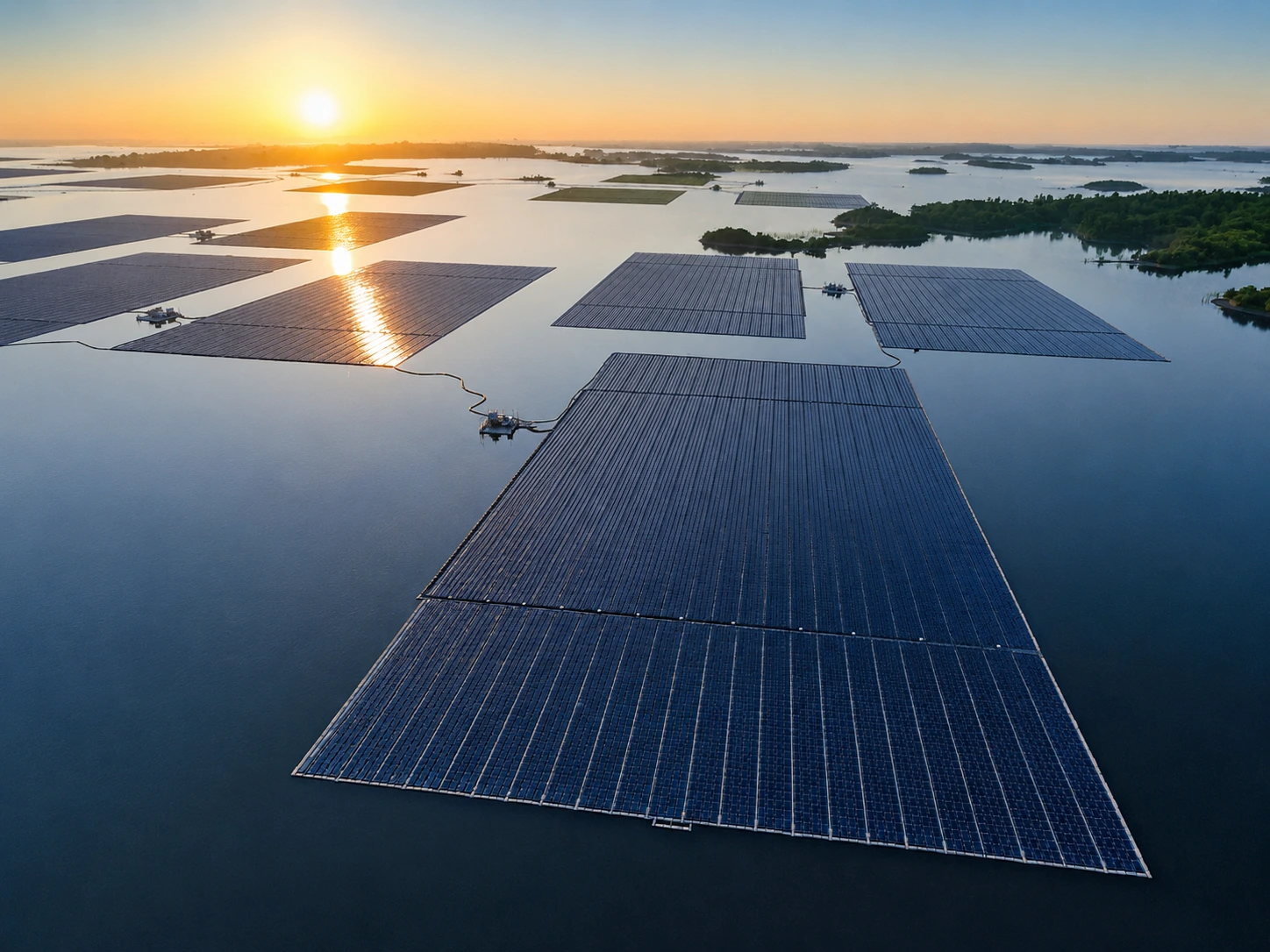
Corrosion-free ferrocement platforms engineered for India's utility-scale floating solar - built where electrical reliability is non-negotiable.
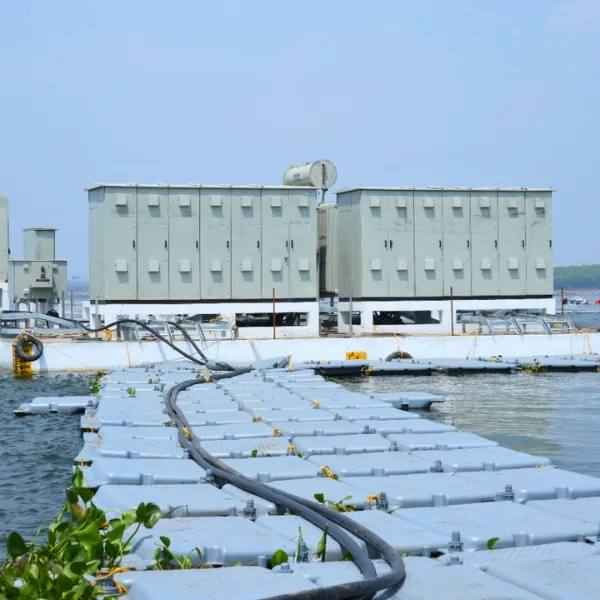
Floatex Solar's ferrocement platforms are the proven foundation for floating solar power plants across India - from the largest FSPV installation at NTPC Ramagundam to utility-scale projects on Kerala's backwaters. When electrical reliability is non-negotiable, ferrocement delivers.
Ferrocement is a thin-shell composite of Portland cement mortar reinforced with densely layered wire mesh, achieving exceptional strength-to-weight ratios that make it ideal for floating structures carrying heavy electrical equipment.
Portland cement mortar is applied in thin, controlled layers over a closely spaced steel mesh armature. Unlike bulk concrete, ferrocement relies on mesh distribution, not mass, for structural integrity.
First used in shipbuilding in the 19th century, ferrocement's durability in aquatic environments is backed by 150+ years of structural practice in some of the world's harshest marine conditions.
Wall thickness and shell geometry are engineered to deliver exact displacement for a given equipment load, with controlled freeboard that keeps electrical components safely above the waterline.
Cement and steel are both recyclable at the end of asset life. Ferrocement contains no polymer degradation products, leaches nothing into the water body, and aligns with ESG reporting requirements.
Heavy inverters and transformers create concentrated point loads that HDPE pontoons flex and fatigue under over time. Ferrocement holds geometry precisely as designed, protecting sensitive electrical equipment from vibration-induced stress across a 25-year service life.
Steel corrodes. Ferrocement does not. Permanently wet surfaces, dissolved mineral salts and fluctuating pH are its native environment. Our mix designs are calibrated to site-specific water chemistry, delivering full chemical inertness for alkaline reservoirs, brackish water bodies and industrially impacted sites.
Ferrocement can be cast into any geometry - flat equipment decks, integrated cable conduit channels, drainage features and equipment plinths - all as a single monolithic structure. Connection interfaces are cast in, eliminating field drilling and ensuring watertight integrity throughout.
Cement, sand and wire mesh are domestically sourced and price-stable. No painting, no cathodic protection, no polymer component replacement. On large projects requiring dozens of inverter and transformer platforms, the cost advantage over FRP and steel compounds significantly at the portfolio level.
Ferrocement platforms are prefabricated at our facility and transported to site for assembly, minimizing on-water construction time. Modular architecture supports rapid scale-up - critical for utility-scale FSPV projects with tight commissioning schedules.
Unlike HDPE and FRP, ferrocement platforms do not release plasticizers, antioxidants or polymer degradation products into the water bodies they float on. Thin-shell construction minimizes material use while maximizing structural performance - resource efficiency is built in.
Take a look at some of the highlights of our floating solar projects in India.
VIEW ALL PROJECTSWe also provide supervision services to support your contractors throughout construction, ensuring seamless project execution and adherence to design specifications at every stage.

Ferrocement is a thin composite material made by combining cement mortar with layers of wire mesh spaced closely. Its structural behavior depends greatly on the reinforcement distributed throughout the structure; therefore, relatively thin structures can be designed for applications such as floating platforms and marine structures.
Some equipment in a floating solar power plant (FSPP), such as inverters, transformers, and switchgear, requires a rigid floating platform to withstand concentrated loads. Ferrocement can be used to construct floating utility platforms or barges that provide the required buoyancy, freeboard, and equipment arrangement.
Ferrocement barges can be used as floating electrical platforms to house utility equipment such as inverters, switchgear, transformers, and monitoring systems.
Typically, they serve different purposes within a floating solar project. Modular floating systems typically use HDPE floats to support solar modules, while ferrocement platforms provide stiffer bases for heavy electrical equipment.
Ferrocement has a long history of use in marine and water-based structures when it is properly designed and engineered. Its performance depends on the quality of the mortar, reinforcement details, workmanship, water chemistry, loading, crack control, and environmental conditions. Therefore, it should be designed specifically for each project rather than treated as a standard structure.
The buoyancy design depends on the total weight of the structure, electrical equipment, operational loads, and required safety margin. The design also considers freeboard, equipment location, stability, water-level conditions, and the platform’s compatibility with the rest of the floating solar PV structure.
Yes. The equipment deck, plinth, drainage system, cable routing, and connections can all be incorporated into the ferrocement platform’s structural design. This can be useful when the floating electrical system needs to be customized to accommodate a specific equipment package.
The platform can be prefabricated before being transported to and installed at the project site. It is then integrated with the plant’s electrical, access, and cable management systems as part of the bigger floating solar EPC plan.