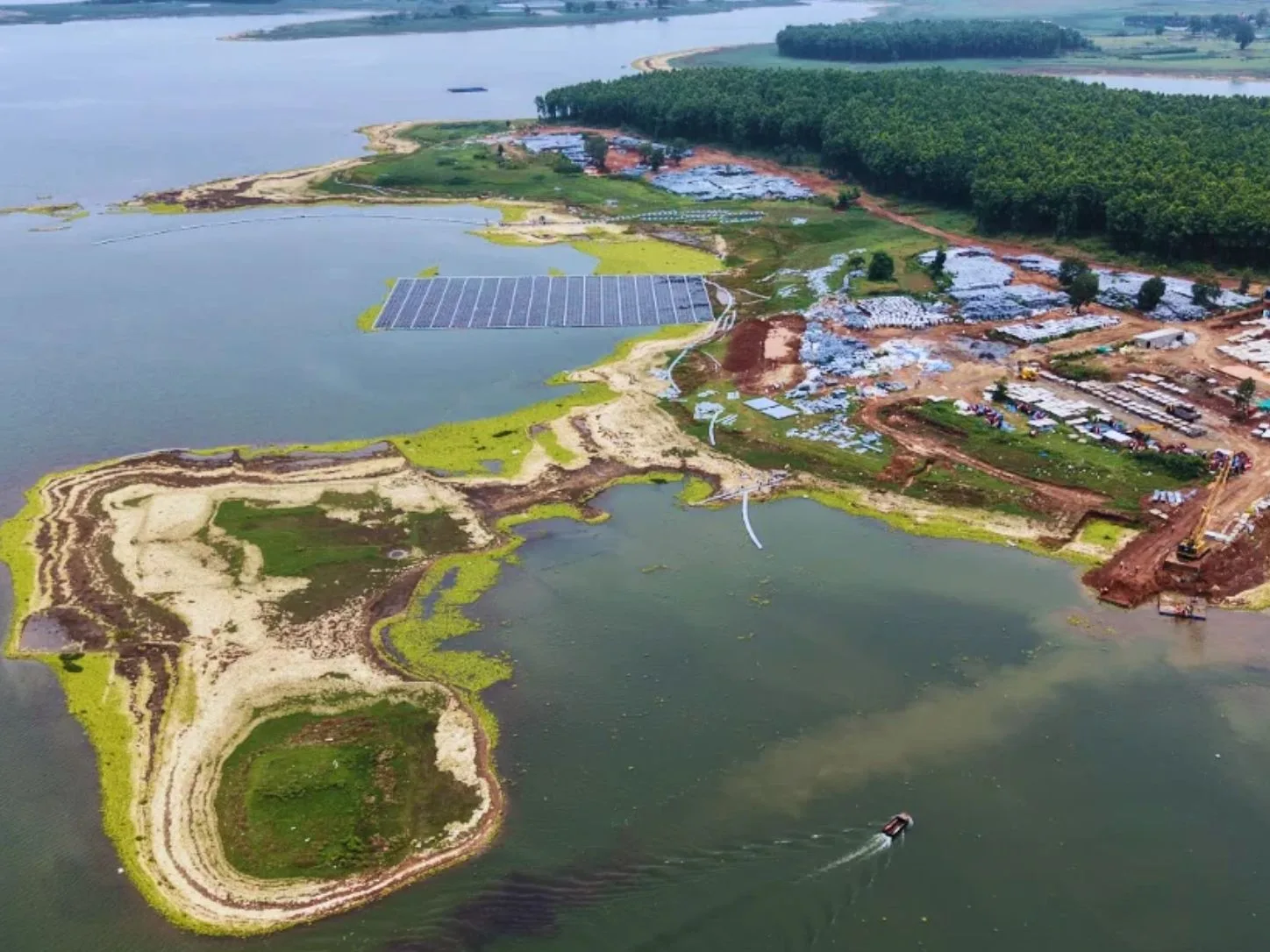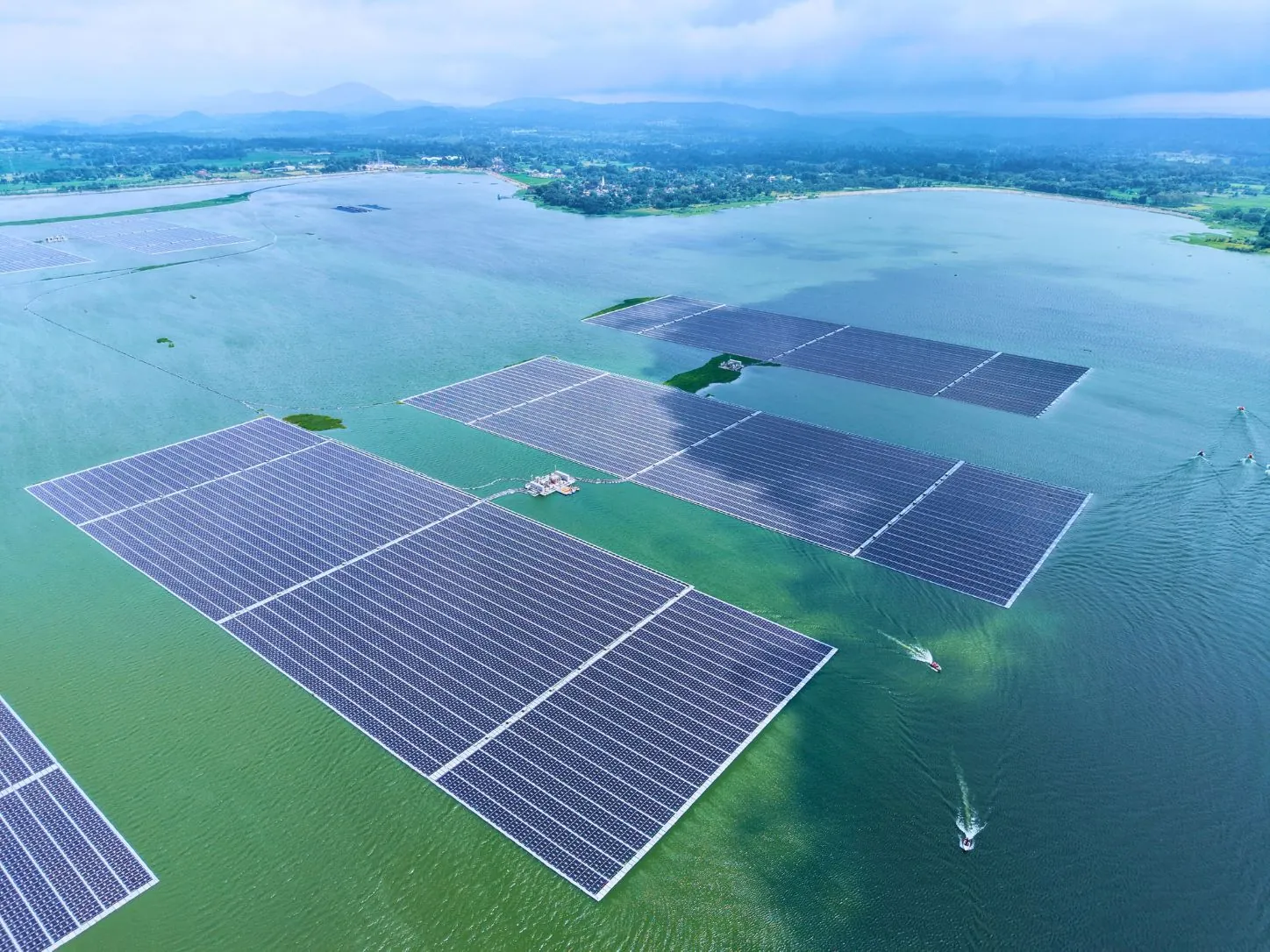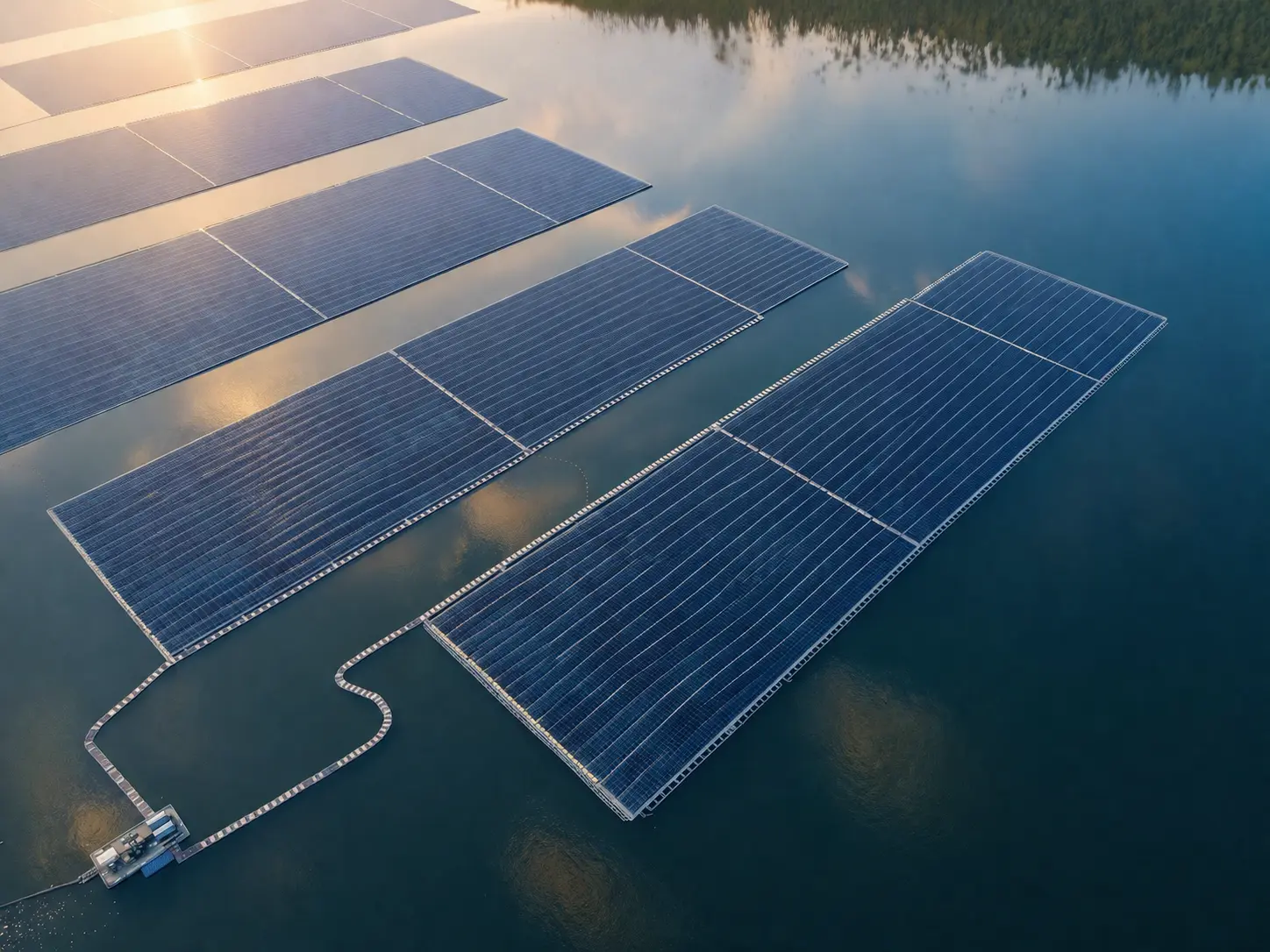
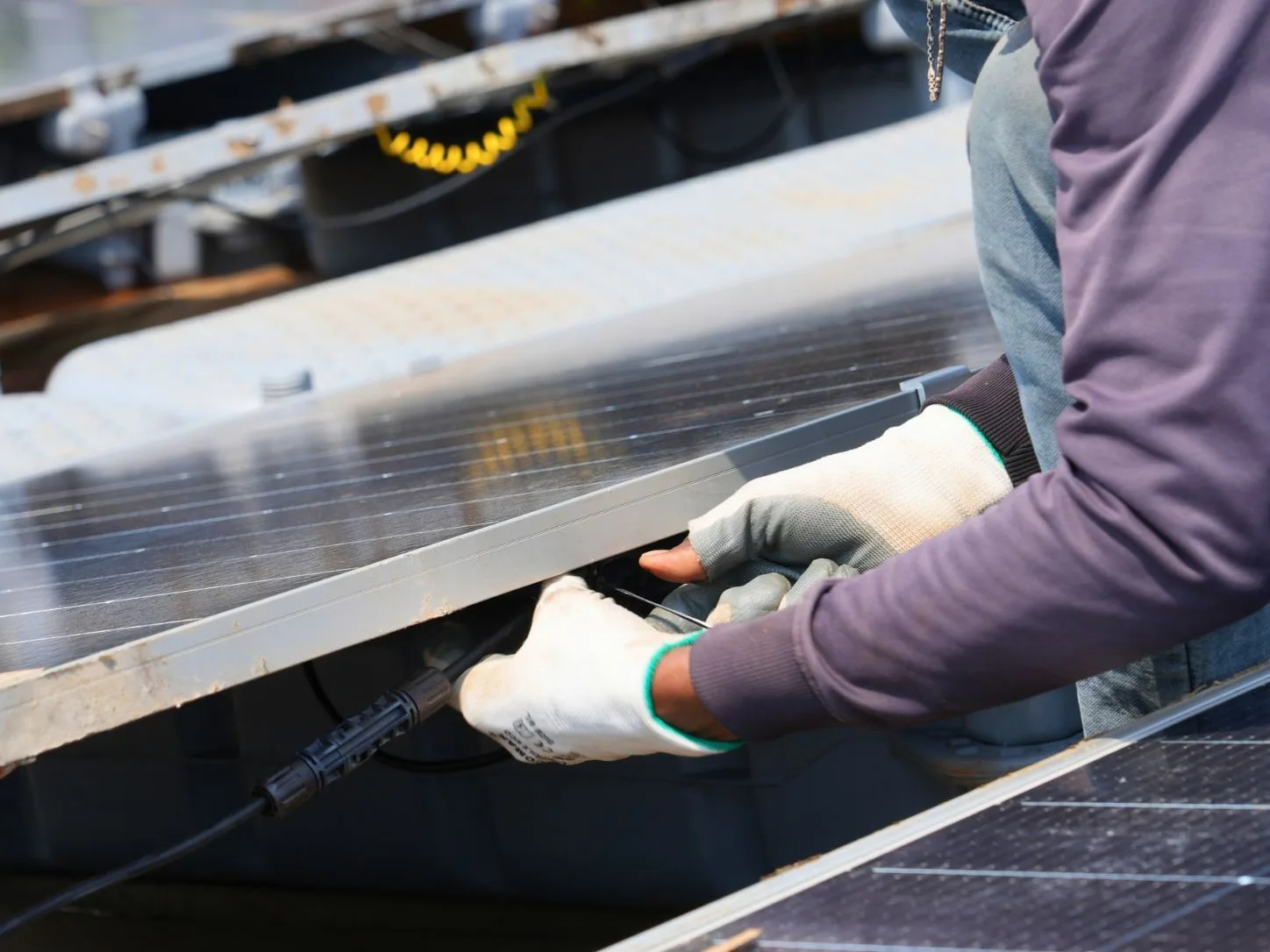
A floating solar power plant is surrounded by water.
This does not make a fire easier to manage. In some respects, it makes the crisis harder to manage.
A fault may occur hundreds of metres from shore. The affected equipment may still be energized. A boat or floating walkway may be necessary to gain access. Wind can carry smoke and flames, and the fire can also place additional loads on the floating structure. And the same water that might seem to be an inexhaustible firefighting aid presents a potential electrical hazard environment for firefighters.
A fire safety solution for Utility-Scale Floating Solar Plants is not limited to simply recommending the type of fire extinguishers to use; it must start and end with the project's specific needs.
At Floatex Solar, we believe it has to be designed around three questions:
- What is the time response to detect the abnormal condition?
- What is the maximum amount of plant that can be isolated?
- And can people physically access the incident without entering into a larger hazard?
A real FPV fire shows why isolation matters
In France, a floating PV (FPV) plant known as O'Mega 1, with a capacity of 17 MW, caught fire in January 2022 due to high winds.
The plant operator stated that repeated motion and friction caused cables to wear against modules and junction boxes. A short circuit occurred, and three floats burned.
One detail is particularly important.
The related inverters were shut down, but due to the presence of an electrical source in an aqueous environment, firefighters were unable to intervene at that moment. It was then automatically turned off at the delivery point. Eventually, about 15 MW of the 17 MW installation could be put back into service.
This incident demonstrates why FPV fire safety must be addressed at multiple levels.
- An electrical fire precursor can be caused by mechanical movement.
- Shutting down conversion equipment does not necessarily remove all electrical hazards within the PV field.
- Accessing the site by water is fundamentally different from driving into a ground-mounted solar farm.
- The ability of plant segmentation to preserve unaffected generation after an incident is limited.
Fire safety begins well before a flame appears.
What can initiate a fire on a floating PV plant?
The PV module itself is only one part of the risk picture.
| Potential initiating condition | FPV-specific concern | Design response |
|---|---|---|
| Damaged DC cable | Continuous movement can create abrasion or cyclic bending | Cable restraint, bend-radius control, inspection and protected routing |
| Loose or degraded connector | Humidity, movement and poor connection can contribute to overheating/arcing | Qualified connectors, correct assembly and thermal/electrical inspection |
| Combiner/inverter fault | Equipment may sit remotely on floating or near-shore platforms | Detection, protection and accessible isolation |
| Structural damage | Floats or modules can move into abnormal positions | Structural containment plus automatic electrical protection |
| Lightning/surge event | Large exposed water surface and extensive cabling | Coordinated surge and earthing design |
| Transformer/electrical-platform incident | Concentrated electrical energy and potentially combustible materials | Separation, protection zones and emergency access |
| Float/material ignition | Polymer behaviour depends on material formulation and system design | Fire-risk assessment, material qualification and propagation control |
A fire-risk assessment of floating solar is specifically recommended in the DNV recommended practice, including consideration of the presence of flammable components, moving parts, and changing mechanical loads and weather conditions, as these can influence the likelihood of fire and the efficacy of the emergency response. It also covers the fire behaviour of float materials.
The key point is that fire risk cannot be considered separately from water-related conditions, just as structural design cannot be considered separately from fire safety.
- Unusual cable movements can be caused by a mooring failure.
- Displaced floats can cause connector strain.
- Modules may be stacked or bent due to storm damage, exposing conductors.
In 2019, a major typhoon in Japan caused damage to one of the largest floating plants (13.7 MW, Yamakura), and an investigation revealed that the anchor failure was caused by progressive structural damage, which in turn resulted in damaged electrical equipment shorting and causing a fire.
Abnormal structural states must also be considered as part of the fire engineering, in addition to normal electrical operation.
"Switch off the inverter" is not an emergency strategy
This is one of the key principles for PV emergency design.
When PV modules are exposed to light, they produce electrical voltage. Even rapid shutdown systems don't actually switch off the semiconductor material - they are meant to contain energized conductors and minimise the exposure to responders, says the US Department of Energy.
With floating solar, that needs to be clearly evident in the single-line diagram and the emergency plan.
The World Bank/SERIS Floating Solar Handbook for Practitioners has suggested using a DC-side isolator in a convenient location and AC-side isolators as backup switch-off devices. It also focuses on the labelling of cable strings and switching equipment.
At utility scale, we would take this principle further.
Emergency isolation should answer a series of practical questions:
- When this switch is turned, what happens to the energy?
- Which equipment remains energized due to module illumination?
- Is it possible to isolate an array without getting near an incident?
- Is the MV feeder capable of being isolated by itself?
- Is it possible for shore personnel to identify the correct inverter block or island remotely?
- Does SCADA validate breaker and isolator status or just display zero inverter output?
- If so, can emergency isolation points be accessed at maximum and minimum reservoir levels?
These answers should not be a "surprise" for an operator in an emergency.
Isolation should follow the physical plant
A 100 MW Utility-Scale Floating Solar Plant should not have one practical emergency boundary simply because it has one grid interconnection.
A more useful architecture creates successive containment zones.
| Isolation level | Typical purpose | Desired consequence |
|---|---|---|
| String / DC circuit | Local electrical fault | Remove the smallest affected DC circuit |
| Inverter block | Inverter or associated DC fault | Isolate a defined generation block |
| Floating island | Fire or structural emergency affecting one array section | Separate the affected island electrically |
| MV feeder | Transformer/collection fault | Remove several blocks without shutting the entire plant |
| Plant interconnection | Major site emergency | Complete export shutdown |
The actual configuration is dependent on the plant topology, equipment and applicable regulations.
The principle remains the same.
Emergency isolation should be granular enough to prevent responders from being exposed to unaffected parts of the plant when dealing with a local fire.
This also supports controlled recovery. The O'Mega 1 incident serves as an example: Investigation of most of the unaffected 17 MW plant enabled re-start.
Fire access needs to be designed before the floats are launched
Typically, ground-mounted PV can enable emergency vehicles to access specific areas at a site.
An incident may occur 300, 500 or 800 metres offshore, depending on the plant's layout.
That changes what "access" means in an emergency.
DNV's guidance for FPV specifies that floating structures must allow access to the key equipment and space for emergency services. The fire-safety provisions include evacuation walkways, stretcher movement, muster points, fire brigade access points and scenarios where fire-fighting equipment is used as areas to be considered in the fire-safety plan.
For a large FPV plant, our emergency-layout review should therefore consider:
- Shore access: are there any restrictions on access to the launch or access point by the emergency service?
- Water access: do suitable emergency boats exist and do they have the capacity to operate with the relevant reservoir conditions?
- Internal access: are there walkways or service corridors to electrical platforms and high-risk equipment?
- Array spacing: if the response concept involves response craft, will there be enough space between the islands?
- Casualty evacuation: can an injured technician be removed from the electrical area without entering the affected electrical area?
- Night operation: can navigation, equipment identification and emergency shutdown points be used in the dark?
- Changing water level: is access still possible with the water level a few metres lower?
The fire plan should be tested against the physical reservoir, not just shown on a CAD drawing.
Water below the modules is not automatically firefighting water
Please note that water under the modules is not necessarily firefighting water.
This distinction should be made clear.
Electrical-shock hazards can occur during a solar PV fire response, including when water is applied. Live PV components and electrical current through water are listed as hazards that firefighters should take into account by the US Department of Energy.
The IEA PVPS review of firefighter operations also highlights the risk of electrical shock, arcing and the importance of understanding system isolation before approaching damaged PV equipment.
Therefore, a floating solar fire strategy should not be based on the assumption that there is a reservoir underneath, so extinguishing the fire will be easy.
Suppression tactics, extinguishing media, responder stand-off distances, electrical conditions and acceptable intervention methods must be determined in consultation with the competent fire authority for the plant.
Sometimes isolation and containment are safer initial responses than close intervention.
That decision should be made by trained emergency responders, rather than being based on assumptions made during EPC design.
Detection can reduce the size of the emergency
Early detection and response can help limit the scale of a fire.
A utility-scale FPV monitoring strategy should be able to identify any abnormal electrical behaviour within a short timeframe, enabling operators to investigate or isolate equipment before damage can propagate.
Useful monitoring and protection layers include:
- monitoring of inverters, strings and combiners;
- monitoring of insulation resistance and ground fault;
- protection alarms and breaker status;
- monitoring of irregular currents or voltages;
- thermal inspection of connectors, terminations and electrical equipment;
- periodic inspection of cable abrasion and unsupported movement; and
- alarms associated with extreme wind, wave or structural events.
This is especially relevant for FPV, where mechanical degradation of cables can develop over time.
The O'Mega 1 incident illustrates this interaction: repeated motion and cable friction preceded the short circuit that started the fire.
The World Bank also lists the following items as concerns in FPV inspections - cable movement, chafing and degraded insulation, further underlining the importance of cable management as an electrical and mechanical reliability issue.
The emergency plan should be commissioned like equipment
A response plan that is kept in an office is not sufficient.
Prior to commercial operation, we would expect the emergency procedure to be rehearsed with the personnel responsible for operating it.
That should confirm:
- the person(s) authorized to start partial and/or full shutdown;
- which control-room indications affirm successful isolation;
- where emergency isolators and breakers are physically located;
- what to look for when identifying plant blocks from shore and from the water;
- how emergency services access the reservoir;
- where rescue boats and PPE are kept;
- how an injured person is evacuated;
- how the control room is able to communicate with responders on the array;
- whether any sections of the system will still be energized after every shutdown; and
- how the plant is inspected before re-energization.
The following test can be useful:
Could any outside emergency-response team know what to do at the plant if they didn't get involved in its design?
If not, then the emergency architecture is too reliant on institutional knowledge.
Fire safety should influence the array architecture itself
Fire protection at utility scale does not end with detailed design, nor is it simply a cabinet installed next to an inverter.
It affects the overall plant architecture, including segmentation, walkways, cable routing, float-material selection, electrical-platform location, transformer separation, SCADA, isolation philosophy, boat corridors, muster areas and the distance between adjacent operating blocks.
DNV's more recent standard for floating plants - 2026 FPV - reinforces this more holistic, system-level approach: structural design and DNV-RP-0584 are now part of a unified system designed to address floating plant risk management, rather than one component at a time.
This is how fire safety for floating solar should be approached.
The goal is not to say that there is no possibility of fire on a utility-scale floating solar plant.
The goal is to ensure that if an abnormal electrical or structural event occurs, the plant will detect the event early, deliberately isolate the event, keep responders from entering unnecessary energized areas, and prevent a local event from escalating to a plant-wide emergency.
At Floatex Solar, we believe this leads to the key question for fire safety in large FPV plants:
The question is not simply, "How do you put out a fire on water?"
It is: "How can a utility-scale floating solar plant be designed so that an emergency remains small enough to control?"