
Large pipelines, policy backing, climate finance and scale economics - why capital is moving into floating solar.
Read ArticlePowering Future with 1GW+ Floating Solar.
Floatex Solar, one of the most trusted floating solar companies, delivers end-to-end floating solar power plant solutions for reservoirs, dams, lakes, canals, mines, and industrial water bodies.
We only deliver results.
India’s trusted floating solar infrastructure company, engineering high-performance floating solar plants built to operate for decades.
1 GW+
Executed Capacity
Floating solar power plants commissioned across India’s major reservoirs, dams and water bodies.
14 +
Projects Delivered
End-to-end floating solar EPC projects delivered with precision, performance and zero compromise on quality.
25 yrs
System Lifespan
Floating solar structures engineered for long-life on-water performance with minimal maintenance.
550 MW+
Production Capacity / Year
HDPE floats, floating pontoons and solar infrastructure systems manufactured at scale for India’s growing floating solar market.
Our Solutions
Floating Solar Solutions for Reservoirs, Dams , Canals and Mines
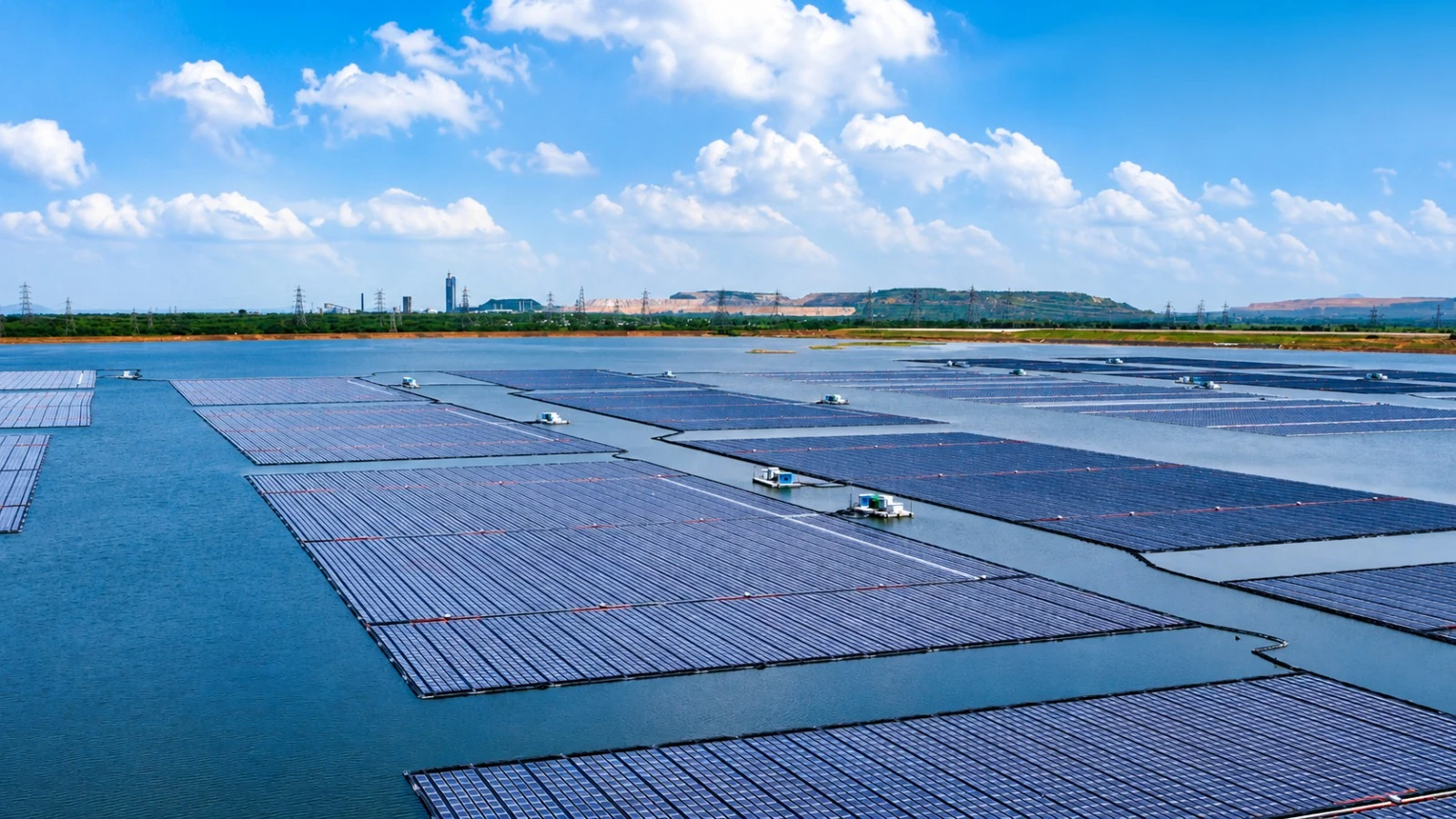
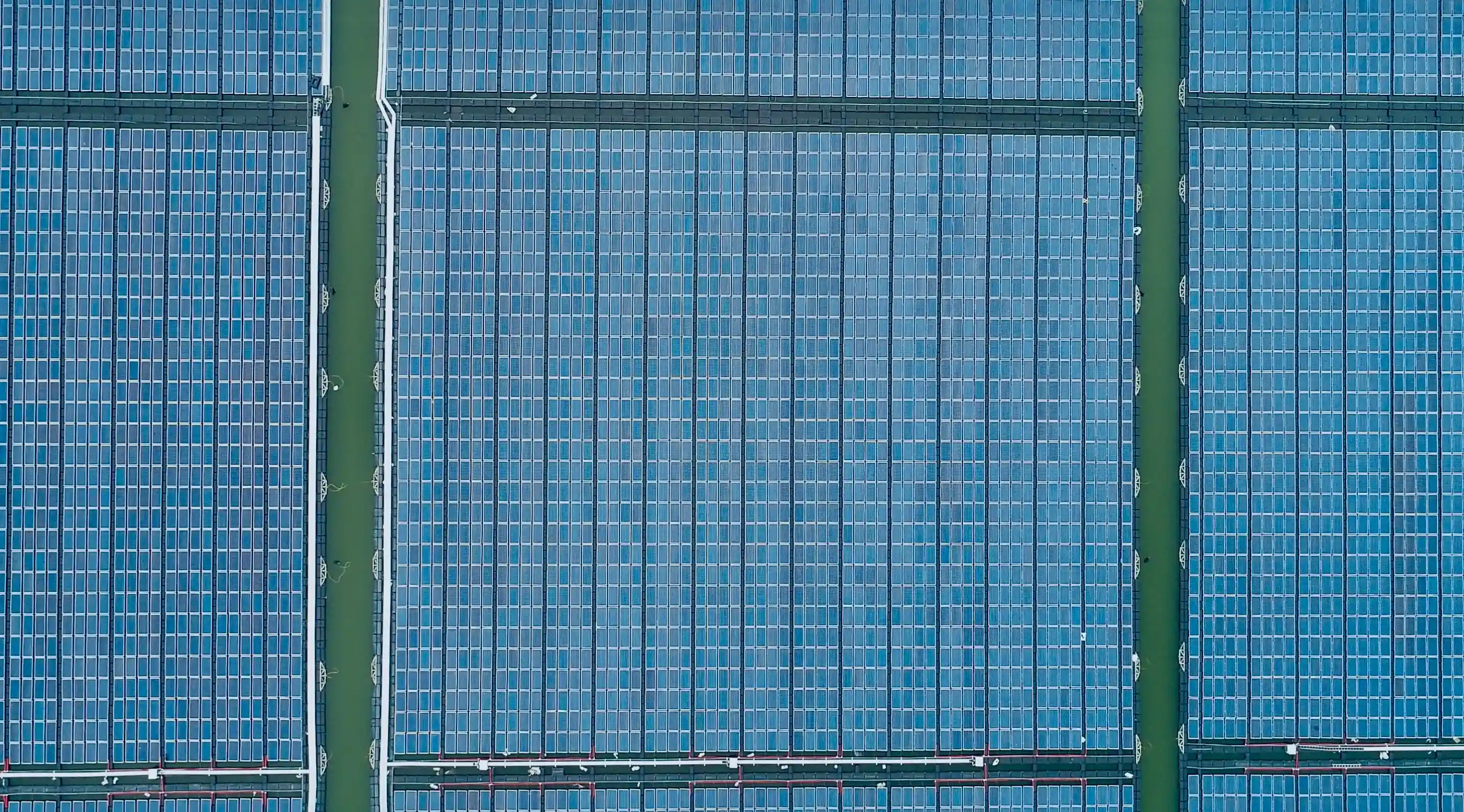
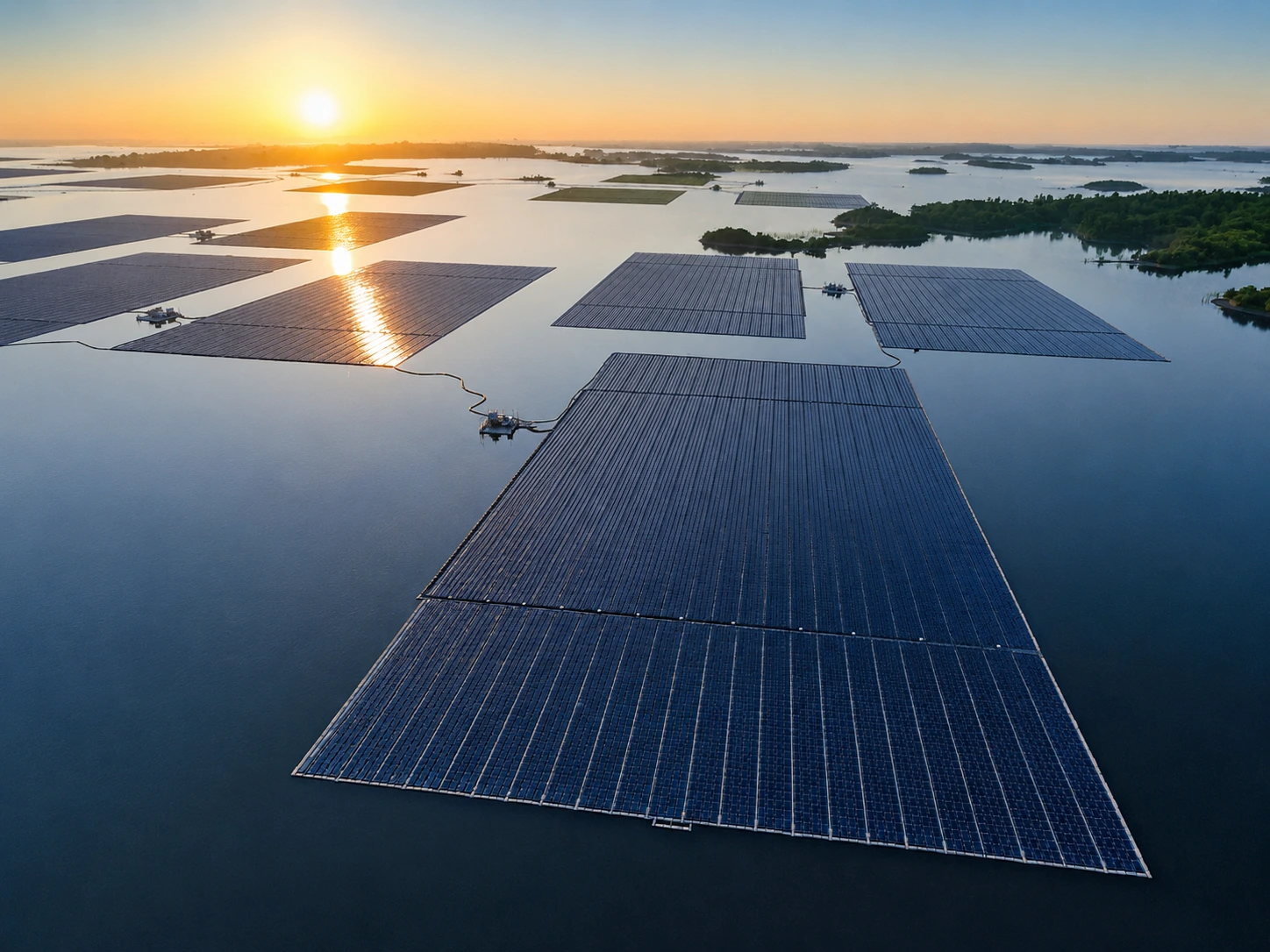
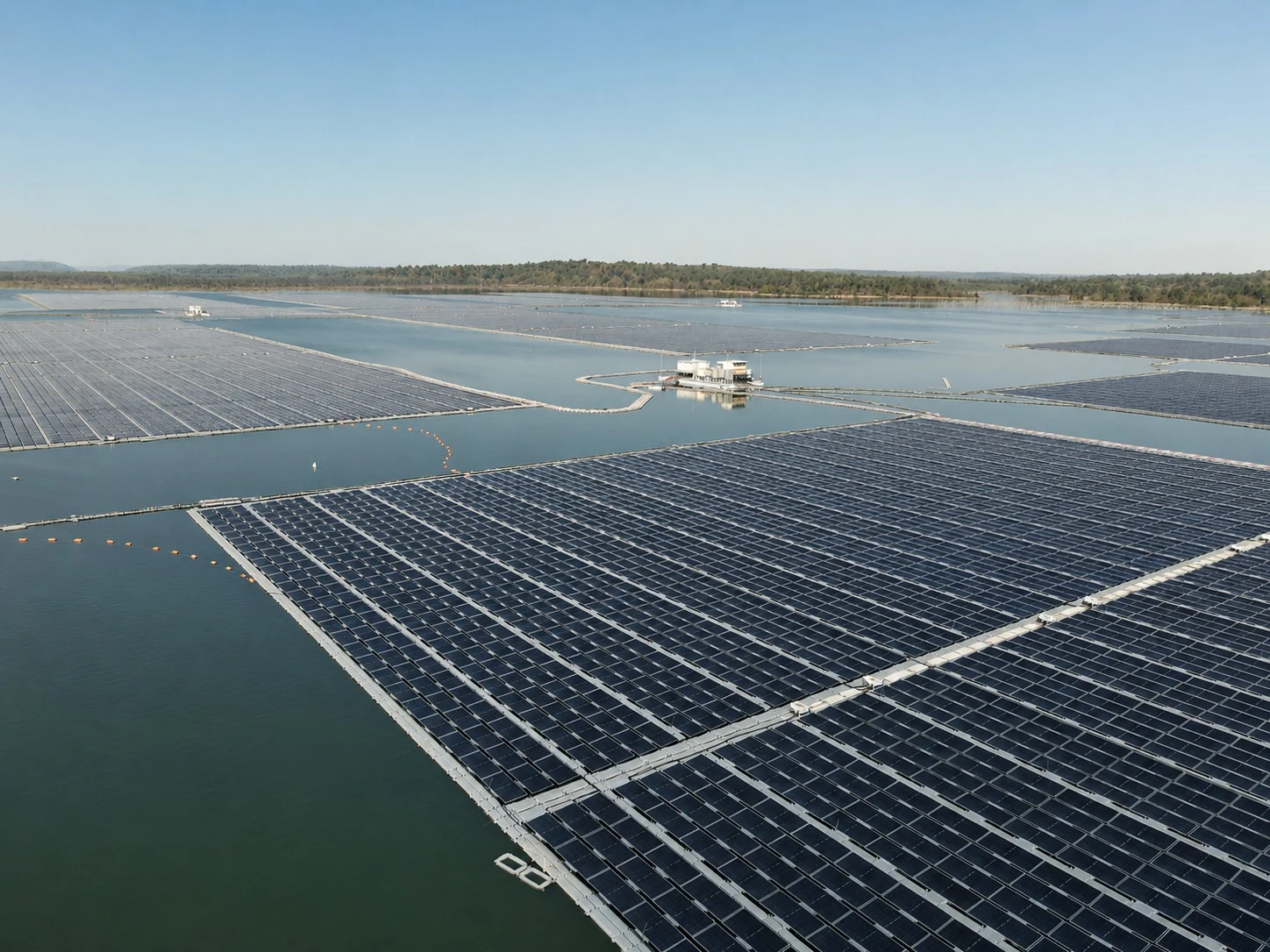
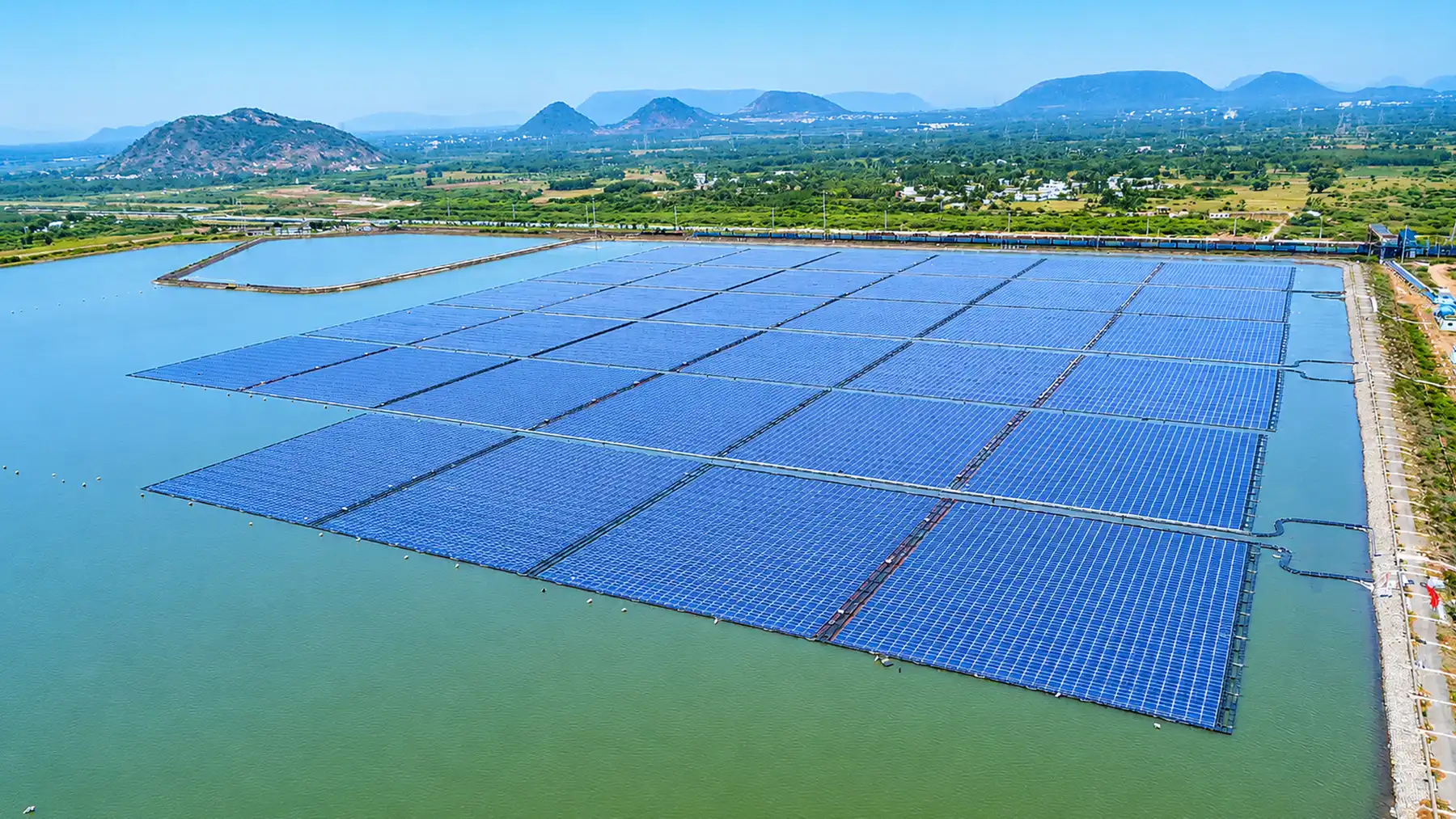
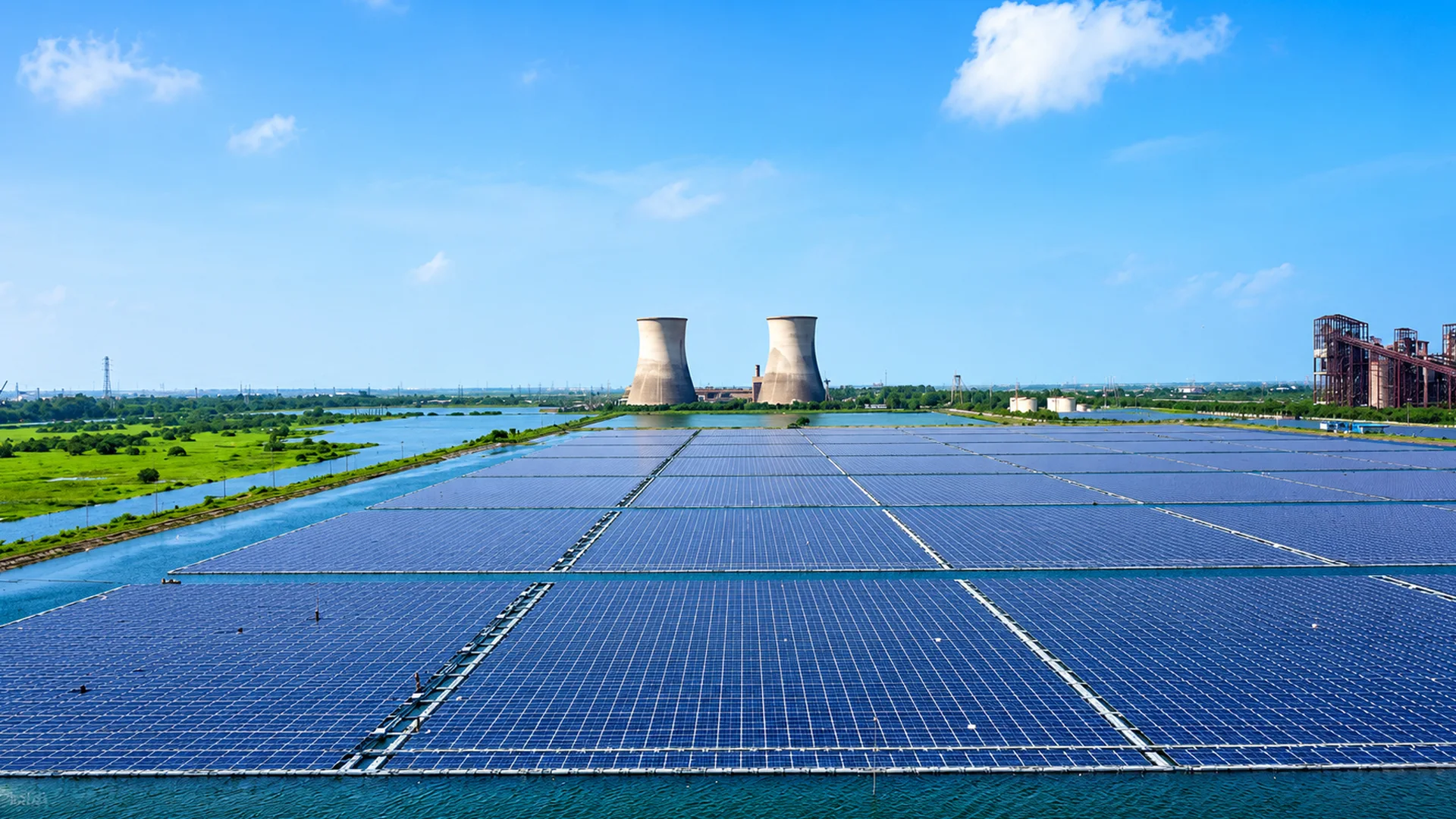
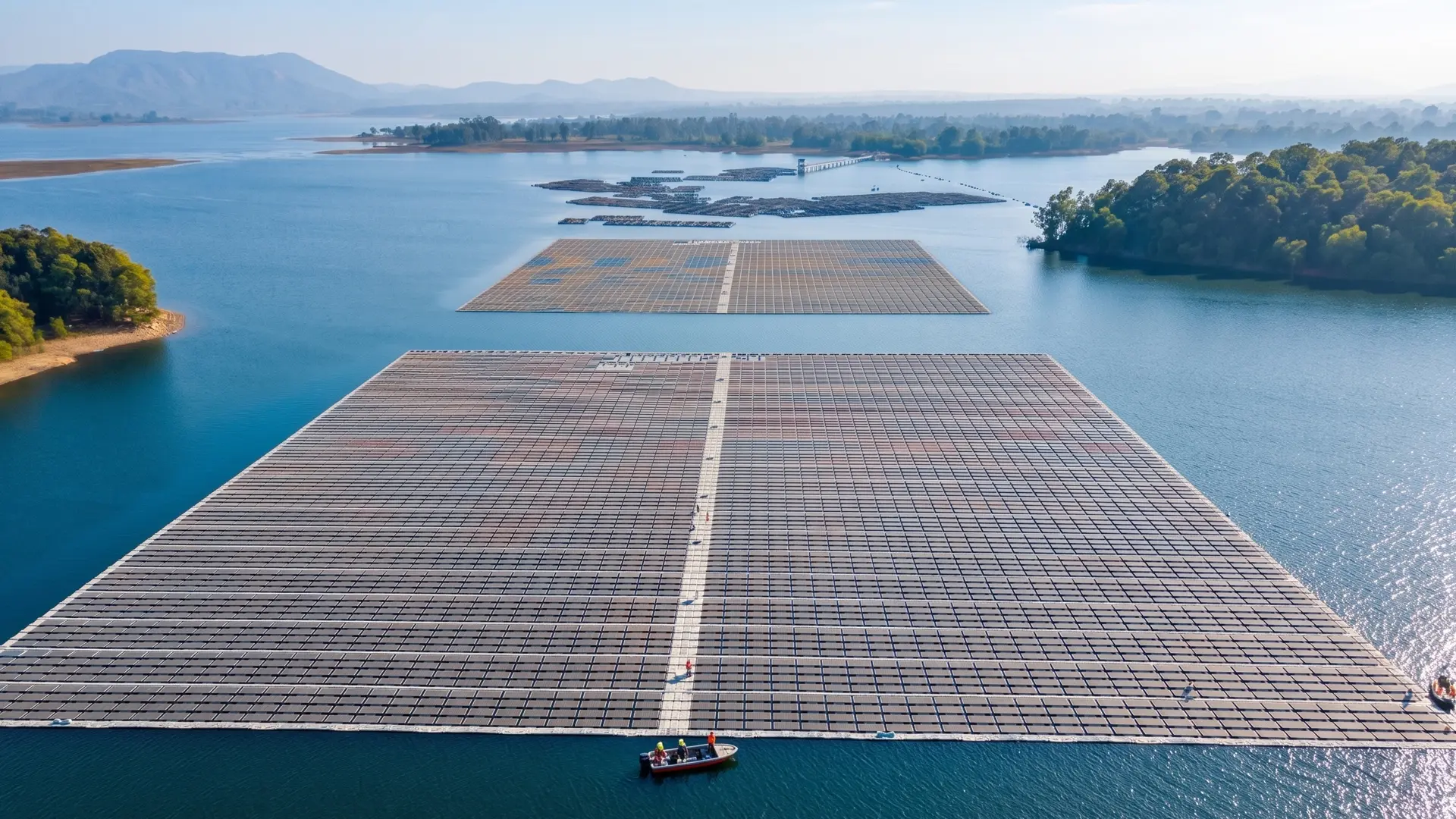
Floatex Solar delivers customized floating solar power plant solutions for reservoirs, dams , mines and canals globally. With 1GW+ of floating solar systems executed, our “float for purpose” approach combines floating solar panels, HDPE floats, floating solar pontoons and durable floating solar structures to generate clean energy on water without using valuable land.
Learn More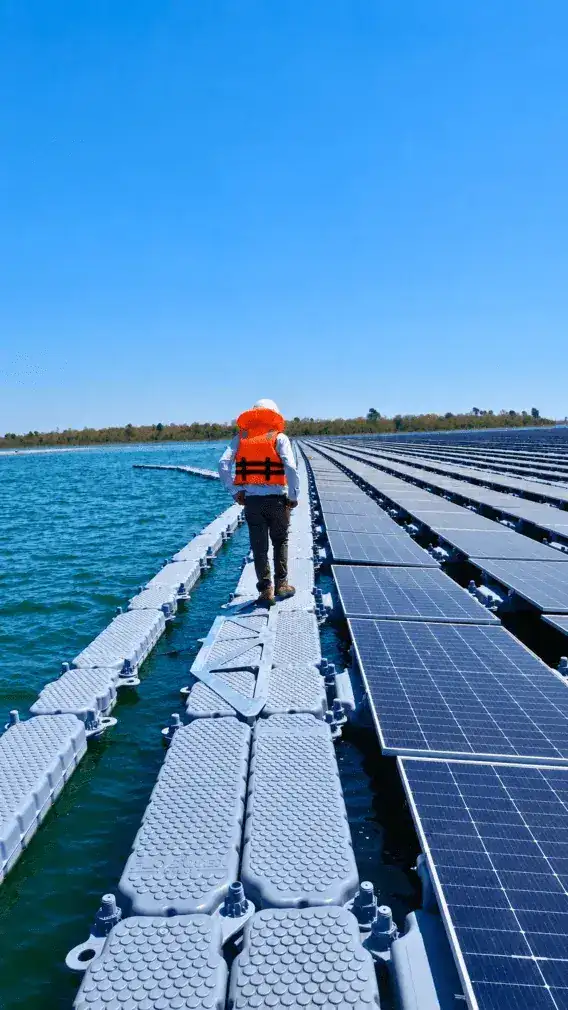
1GW+ Floating Solar Executed
Maximized Water Conservation
24/7 Clean Energy
25 Year design Lifespan
- NTPC Limited
- SECI - Solar Energy Corporation of India
- AMPIN Energy
- BHEL - Bharat Heavy Electricals Limited
- Tata Power
- Sterling & Wilson
Our Projects
1GW+ Floating Solar
1GW+ Floating Solar
Projects Across India
From NTPC Ramagundam to Omkareshwar, Floatex Solar has helped execute some of India’s most significant floating solar farm projects.
Engineering Insight
Powering the global shift to clean energy through floating solar projects that transform water into a reliable platform for scalable, sustainable power generation.
End-to-End Floating Solar Solutions
From feasibility to commissioning, every floating solar capability under one roof.
01
Float Manufacturing
High-durability HDPE floats and floating solar pontoon engineered for long-term on-water performance across reservoirs, dams and canals.
02
Pre-engineering & Feasibility
Site assessments, yield modelling and technical reports to validate floating solar project viability before investment.
03
Engineering & System Design
Complete floating solar structure, electrical and mechanical design, including SLDs, load calculations, BOS layout and solar photovoltaic system integration.
04
Site Analysis
Bathymetric surveys, wind-wave studies, water-level analysis and water quality checks to define the safest, most efficient floating solar PV layout.
05
Mooring & Anchoring Systems
Custom mooring and anchoring systems designed to secure floating solar arrays against water-level variation, wind loads and site-specific conditions.
One Integrated Approach.
Endless Possibilities.
Delivering safe, reliable and efficient floating solar solutions for India’s reservoirs, dams, canals and industrial water bodies.
06
Installation & Electrical Works
Full floating solar EPC execution, including float assembly, floating solar panel installation, cable routing, inverter installation and grid tie-in.
07
On-Site Project Supervision
Dedicated site engineers oversee every phase from mobilisation and installation to testing, commissioning and final handover.
08
Wave Attenuation Systems
Peripheral breakwater and wave attenuation systems that reduce wave energy and protect floating solar arrays in large or exposed reservoirs.
09
Floating Electrical Utility Barges
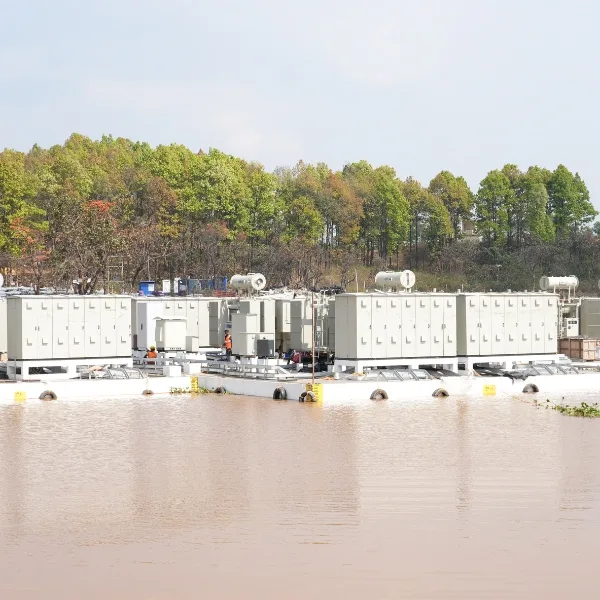
Self-contained floating utility platforms and ferrocement barges designed to house inverters, switchgear and monitoring systems for floating solar power plants.
10
Walkway & Access Platforms
Safe, modular walkway systems that enable maintenance access across the floating solar plant without direct water contact.
News / Blogs
Insights on the Future of Floating Solar
Explore insights on floating solar, clean energy innovation and the technologies shaping tomorrow’s solar photovoltaic systems. From floating solar projects and HDPE float design to EPC execution and water-based solar infrastructure, our articles keep you informed on the future of sustainable power generation.
Offshore FPV, hybrid platforms, vertical bifacial panels, smarter electrical design, and data-driven operations - what's next for floating solar.
Read Article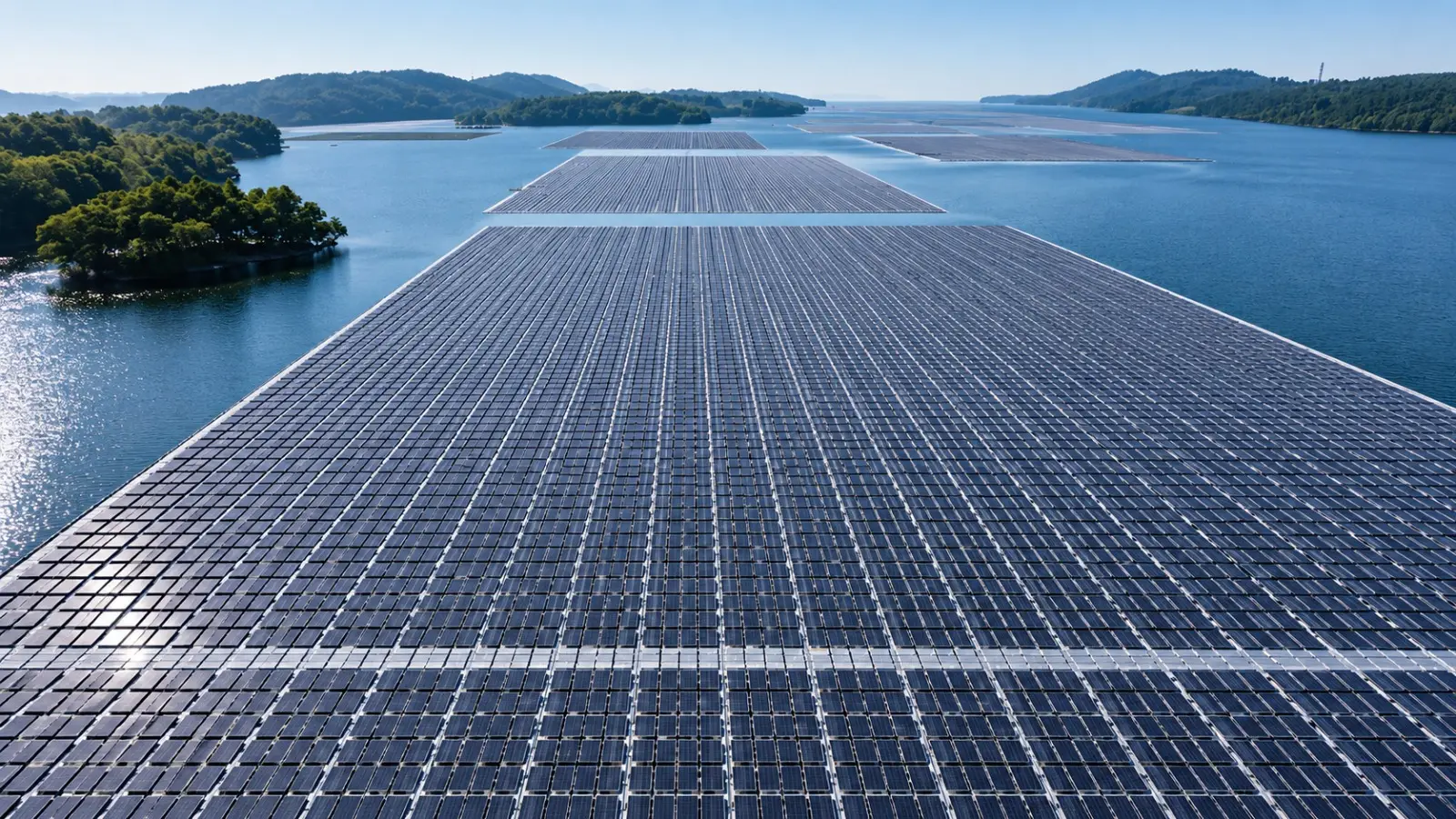
From site survey to commissioning - how Floatex turns engineered designs into floating solar power plants operating on water.
Read Article
FAQ
Floating Solar -
Floating Solar -
Frequently Asked Questions
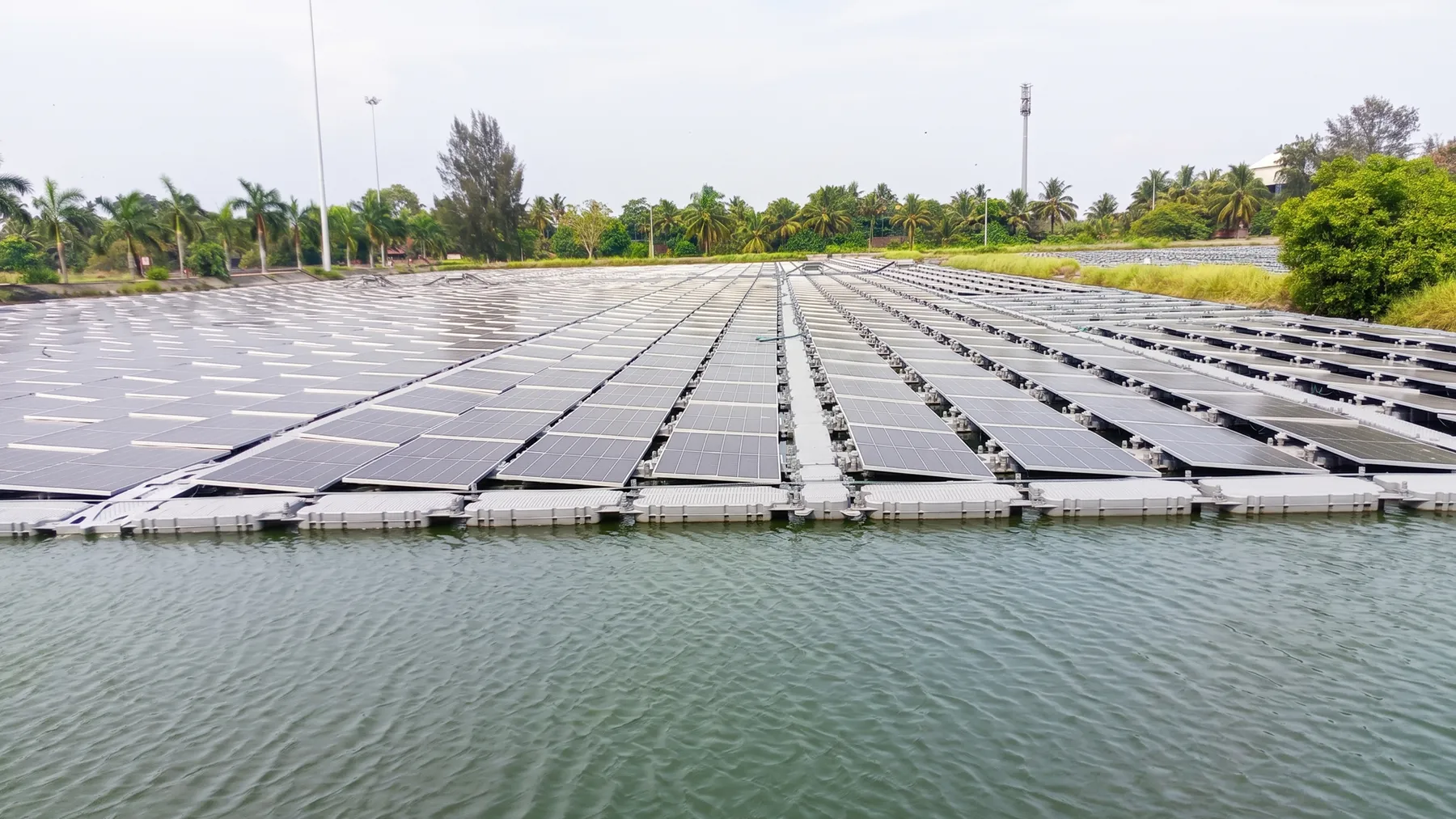
A floating solar power plant is an array of photovoltaic solar panels mounted on floating structures rather than land-based structures. Solar panels are fixed to floats/pontoons, which are in turn anchored and moored in a body of water. Floating solar arrays can be mounted on reservoirs, dams, lakes, industrial ponds, and many other water bodies.
A floating solar power plant is similar to a ground-mounted solar power plant that harnesses solar energy using photovoltaics. The main difference is that the solar panels are mounted on floating solar structures, which include floating pontoons, anchoring systems, electrical components, and access arrangements specifically designed for floating conditions.
The standard floating solar power plant includes solar PV panels, floats/HDPE floats, structural connections, an anchoring and mooring system, cables, combiner boxes, inverters, transformers, and grid-interconnection equipment. Heavy electrical equipment may also be installed on larger projects using ferrocement barges and other utility barges.
One of the benefits of floating solar is that it allows solar energy to be generated without utilizing significant amounts of land. Floating solar power plants may also benefit from the cooling effects of water and can reduce water evaporation from the surfaces they cover. The exact benefits depend on the specific characteristics of each location and the technology used.
Floating solar panels in India can be set up at suitable reservoirs, dams, lakes, canals, mining water bodies, and industrial reservoirs. Before designing any project, however, each location has to be assessed for its suitability in terms of water-level changes, wind and wave regime, bathymetry, water chemistry, anchoring, environmental considerations, and grid availability.
The cost per MW of a floating solar power plant varies depending on the project conditions. In addition to the capacity of the plant, the type of structure, water depth, water-level variation, anchoring, electrical configuration, proximity to existing grid infrastructure, water conditions, and access requirements affect the cost of the project. Hence, a feasibility study should be conducted before determining the cost per MW.
In most cases, both terms refer to a system of solar panels deployed on a water body. “Floating solar plant” is commonly used when referring to engineering or utility projects, while “floating solar farm” is often used for large-scale projects.
Site feasibility is usually the first step for any floating solar project. Important parameters include reservoir geometry and bathymetry, water-level variations, water quality, wind and wave loads, soil anchoring for a soil bottom or bank anchoring, surface area availability, and electrical evacuation and construction access. This evaluation forms part of the pre-engineering and site analysis performed by Floatex.